
Ancient Egypt (A2 - B1)
Section outline
-
Ancient Egypt, one of history’s first civilizations, arose around the Nile River about 5,000 years ago. It lasted for over 2,000 years. The Nile River was the centre of Ancient Egypt. The annual floods brought rich black soil to the banks of the Nile River and made it possible for farmers to grow crops. The river was also Egypt’s main transportation route.
The ancient Egyptians discovered many things. They invented the first kind of paper from the papyrus plant and were the first people to write in pictures, called hieroglyphs. But they became most famous for building stone structures, called pyramids, in which they buried their pharaohs. They still exist because the dry climate has preserved them for almost 5,000 years.
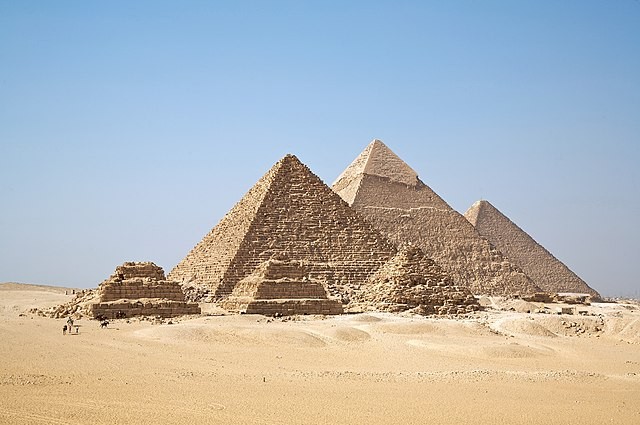
Giza Pyramids
Image:By Ricardo Liberato - All Gizah Pyramids,
CC BY-SA 2.0, LinkWords
- ancient = old
- annual = yearly
- arise - arose = start
- bank = the land on the side of a river
- bury = to put a dead person into a grave
- crop = a plant, like wheat or rice, that farmers grow and sell as food
- discover = to find something for the first time
- invent = to make or find something completely new
- main = most important
- papyrus plant = a plant that grows in the water and was used to make paper
- preserve = protect ; to make something last for a longer time
- soil = the top layer of the Earth on which plants and trees can grow
- structure = building
-