
The Nile River
Completion requirements
Ancient Egypt could never have developed into one of the world’s greatest civilizations without the help of the Nile River. For centuries people bathed in the Nile, drank its water, told legends about it and built tombs and temples and even great pyramids near its banks.
Farming in Ancient Egypt depended on the Nile River. The year was divided into three seasons. The big floods came between June and September. From October to February, farmers ploughed and planted crops in the fertile mud that came from the floods. They built ditches and canals so that the river’s water could spread to the crops. Harvest season was from March to May.
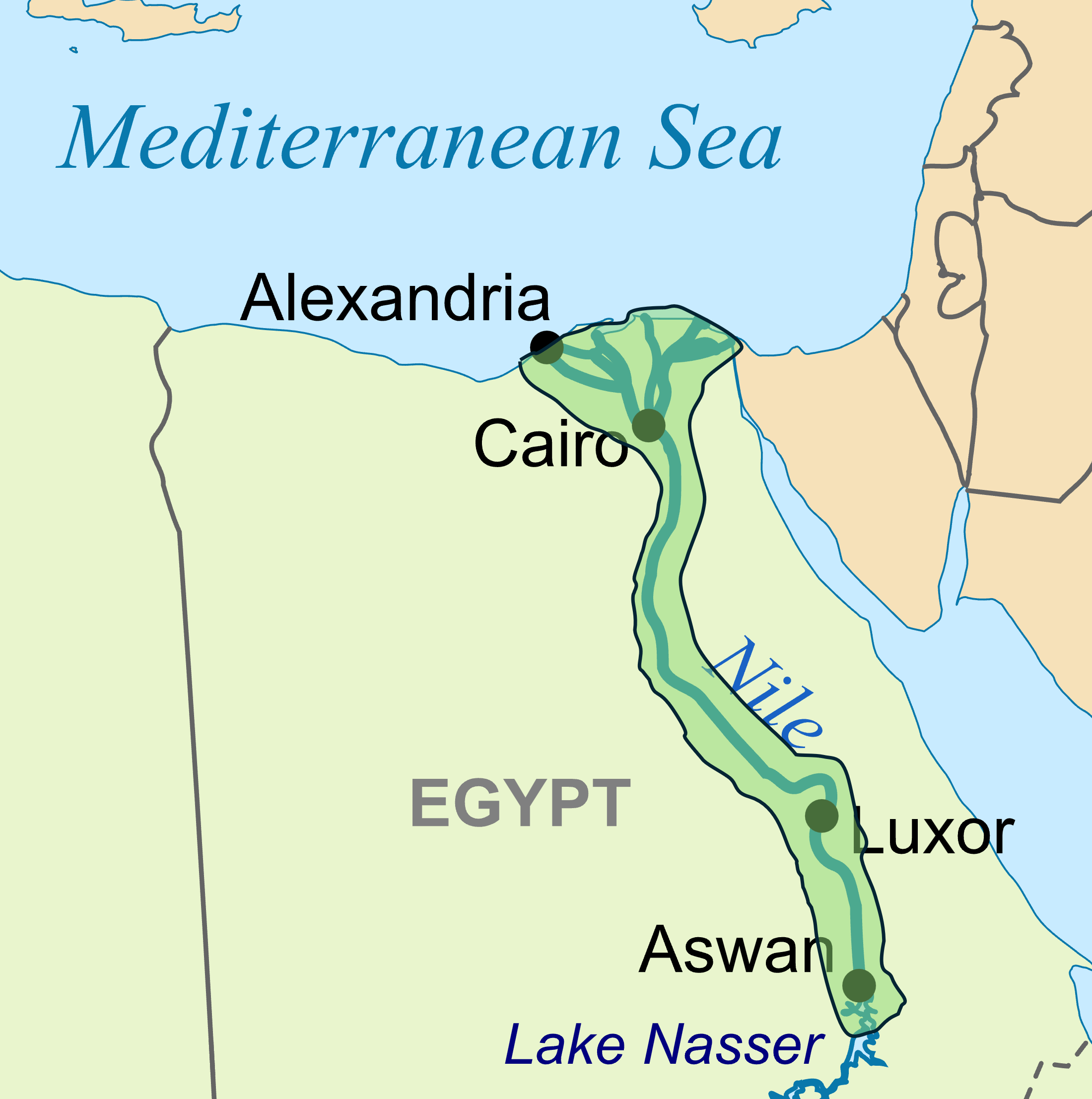
Farming land in Ancient Egypt
Image (modified) :Hel-hama, CC BY-SA 3.0,
via Wikimedia Commons

Words
- bank = the land near the side of a river
- century = a hundred years
- depend on = need something in order to exist
- develop = grow into something
- ditch = a long hole that you dig in order to let in or let out water
- fertile =here: good for farming
- flood = to cover land with water
- harvest season = the time when you bring in crops
- mud = wet earth that is soft and sticky
- plant crops = to put seeds into the ground so that food can grow
- plough = to turn the earth over so that you can plant seeds
- spread = cover, move to
- tomb = a stone structure in which a dead person is buried