
Life in Ancient Rome
County and City Life
Roman cities were very modern places in which people lived, traded and worked. The centre of these ancient cities was a forum, a large open space surrounded by markets, baths, arenas, and other public buildings.
Wealthy Romans could afford living in large, luxurious houses, which often lay on the outskirts of the city, far away from the noise and smell of the city centre. They had servants and slaves to do everyday work for them. The poor population had to live in overcrowded, dirty buildings. They were always in danger of collapsing or being burned down.
Life in the countryside was more relaxed. The population was made up of farmers who raised animals and planted crops. During the summer, they often fought in the army. A latifundium was the large farm of a rich landowner. He was able to make a higher profit by working with slaves.
Normal people lived in small houses or huts that were not as big and luxurious as those of the city. Many inhabitants of Rome had country houses, which they went to in order to escape the hectic city life.
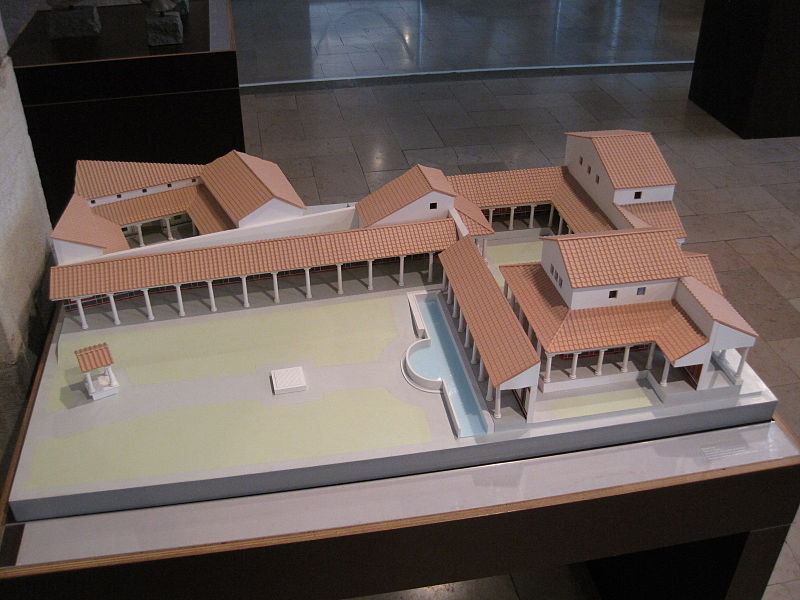
Model of a Roman town house for upper class people
Image:Arnaud 25, CC BY-SA 3.0,
via Wikimedia Commons
The Roman Family
The head of the Roman family was the paterfamilias, the oldest male. He controlled the whole household and had power over all the members of his family. In the upper classes, slaves and servants also lived with a family. Romans often married for political reasons. Many rich Romans arranged marriages for their children so they could stay in the higher classes and keep their influence and power.
When Rome was still a republic, women had very few rights. They had to stay at home and care for the household, prepare meals and look after their children. They were not allowed to own land. This changed when ancient Rome became an empire. Women were allowed to have their own shops and businesses, and they were able to buy land. They could also get a better job.
Food
While many Romans ate simple meals, wealthy inhabitants had the best food the empire could offer. They ate white bread, olives, fruit and cheese, as well as fish. Breakfast was usually a slice of bread or a pancake with dates and honey. Romans usually had a small lunch at about 11 in the morning. Dinner was the main meal of the day. It was normally taken in the late afternoon or early evening. Fish, cooked meat and a variety of vegetables were served. Sometimes they had a small cake with honey for dessert.
Clothes
Roman clothing was made out of wool, which women spun into cloth. Richer citizens could afford to buy clothes made out of silk, linen or cotton, which the Romans obtained from other parts of the empire.
Citizens of Rome wore a tunic, a piece of loose clothing that fell down to the knees. On special occasions, they were allowed to wear a toga, an elegant piece of white clothing that was wrapped around their body.
Women wore tunics and later on stolas, which reached down to their feet. They liked jewellery and experimented in dyeing their hair.
Outdoors, Romans often wore shoes that were closed around the toes, when in the house, they liked to wear sandals.
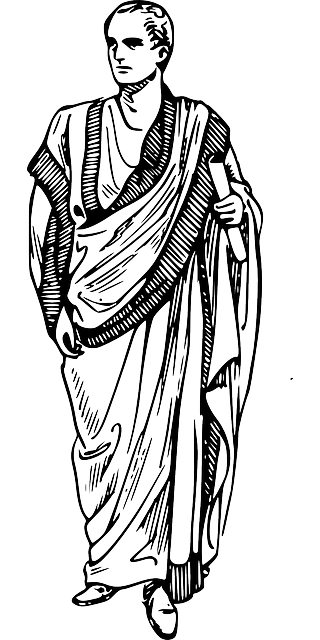
Toga worn by men in the Roman empire
Image : Pearson Scott Foresman, Public domain,
via Wikimedia Commons
Leisure Time
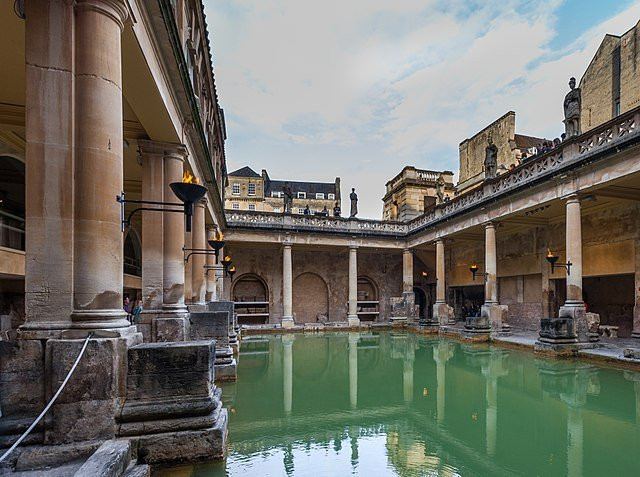
Bath houses were the centre of Roman leisure life. Men and women often got together in separate bath houses. There they could relax, get massages, exercise, take baths and gossip. People of all social classes got together in such public bath houses. Going to a bath was a symbol of cleanliness, of being purer and better than others.
Ancient Romans celebrated religious holidays very often. Almost every god and goddess had their own holiday. Festivals and entertainment were arranged in honour of them.
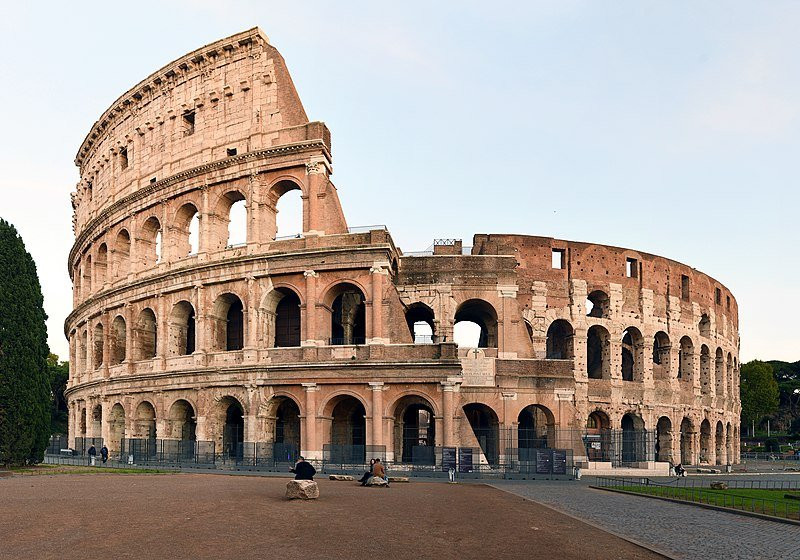
Amphitheatres were the ancestors of modern stadiums. The Colosseum in Rome was, by far, the biggest amphitheatre. It could hold over 50 000 spectators. Gladiators entertained the audience by fighting against wild animals and often combating each other.
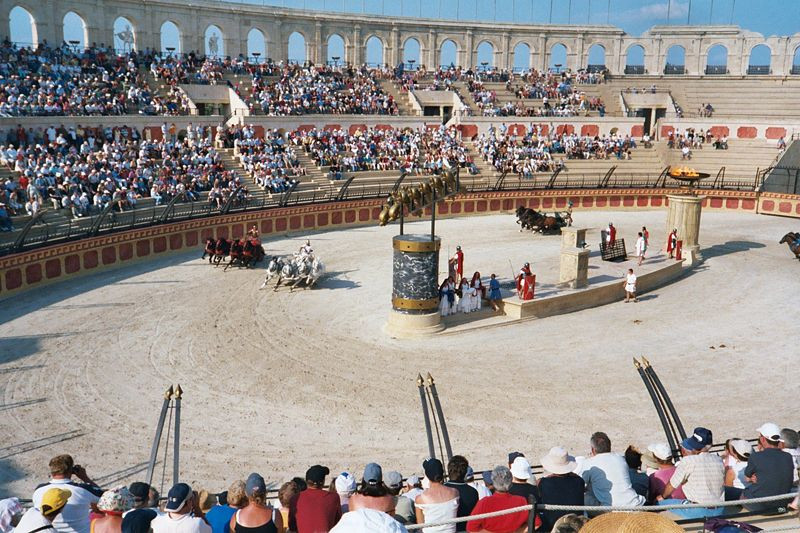
The Circus Maximus was the centre of chariot races. Up to 250 000 people attended such a race. Chariot racing had been popular in Ancient Greece and was one of the highlights of ancient Olympic Games. Each chariot was pulled by four horses.
Roman citizens went to the many theatres in the city that showed plays of famous Roman playwrights. Most of the plays were comedies, in which actors wore masks that showed if they were happy or sad.
|
Ancient Roman bath house |
Colloseum – Rome’s largest amphitheatre |
Chariot race in ancient Rome |

.png)


Education
During the early centuries of ancient Rome, children were mostly educated at home by their parents. Fathers taught their sons how to read and write , as well as the basics of law and religion. Mothers showed their daughters how to cook, weave and spin.
Later on, rich Romans started sending their children to school, which they had to pay for. There they learned to read, write and solve mathematical problems. One of the main tasks was to teach child to become a good speaker. Older pupils studied Greek language and literature, as well as, astronomy.
Words
- afford = to have enough money to buy something you want
- ancestor = here: what came before …
- ancient = old
- astronomy = the study of the stars and planets
- arena = stadium, showground
- arranged = planned, organized
- attend = go to
- audience = the people who watch a game or performance
- basics = the most important things
- business = organisation that lets you buy and sell goods
- by far = here: much more
- care for = take care of, look after
- celebrate = to have a good time; drink and eat with other people
- century = period of a hundred years
- chariot = a wagon pulled by horses
- citizen = person who lives in a place and has rights there
- cleanliness = being clean
- cloth = material used for making clothes
- collapse = break down
- combat = fight
- cotton = plant that grows in hot regions and has white hairs on it
- crop = a plant, like wheat or corn, that farmers grow for food
- date = sweet brown sticky fruit with a long hard seed inside
- dessert = sweet food served after a meal
- dye = put colour into something
- educate = teach
- elegant = stylish, fashionable
- empire = group of countries ruled by a king or queen
- entertainment = things you do to make people happy and give them pleasure
- escape = get away from
- experiment = to try out something new
- goddess = female god
- gossip = when you talk or chat about other people and their private lives without knowing if things are true or not
- household = all the people who live in a house
- influence = here: position in society
- inhabitant = person who lives in a city or town
- in honour = admire; to show how much you like someone
- jewellery = rings, bracelets, and necklaces; things that especially women wear to make them look more attractive
- landowner = person allowed to have land
- law = the rules of a country
- lay = can be found
- leisure life = free time; the time you spend when you don't work
- linen = cloth made from the flax plant
- loose = not tight, free-moving
- male = man
- occasion = event
- obtain = get
- offer = give
- outdoors = in the open, not in the house
- outskirts = outer parts
- overcrowded = too many people living in a small area
- own = to have something yourself, possess
- pancake = flat round cake, made out of flour, milk, and eggs
- playwright = dramatist; person who writes a play
- popular = liked by many people
- profit = here: money
- public = for everyone to visit
- raise animals = to feed animals so that you can use them as food
- relaxed = quiet, not so hectic and chaotic
- rights = the things that the law allows you to do
- sandal = light show that you wear when it is hot; your toes are free
- separate = divided
- servant = someone you pay to clean the house or prepare meals
- silk = thin, smooth cloth made by material from a silkworm
- slave = person who is owned by someone else and who gets little or no money for their work
- slice = thin piece
- solve = to find an answer to a problem
- spectator = a person who watches an event
- spin - spun = to make into thread by twisting and turning material
- surrounded = with an object on every side
- task = duty, job
- toe = one of the five moveable parts at the end of your foot
- trade = buy and sell things
- variety = many different kinds of
- wealthy = rich
- weave = to make cloth
- wool = soft, thick hair of sheep and goats