
Economy
Although Africa is a continent that is rich in resources and raw materials, a large part of its population lives in poverty. In the last few decades, the standard of living has improved but income is still very low. In addition, Africa relies heavily on farming products and minerals as a source of income.
Farming
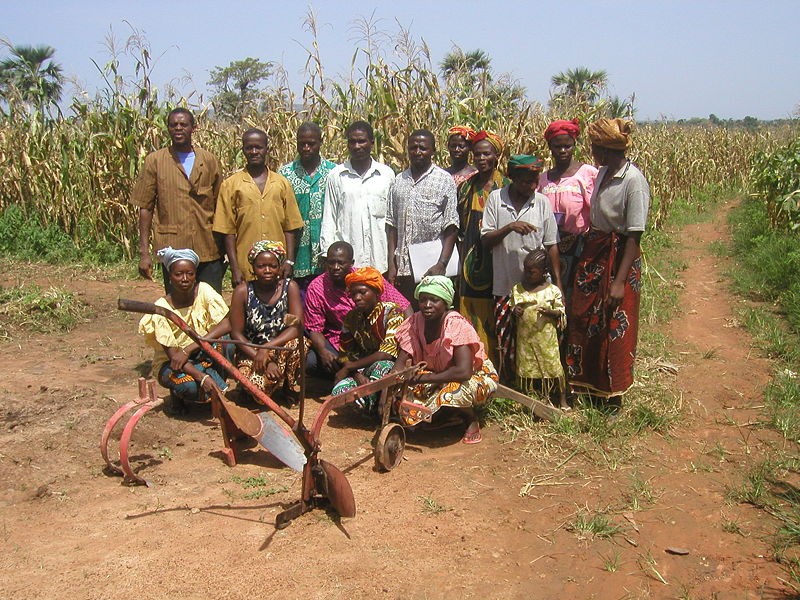
Farming is the most important economic activity and way of earning money for the people of Africa. Almost 70% of its population work in agriculture.
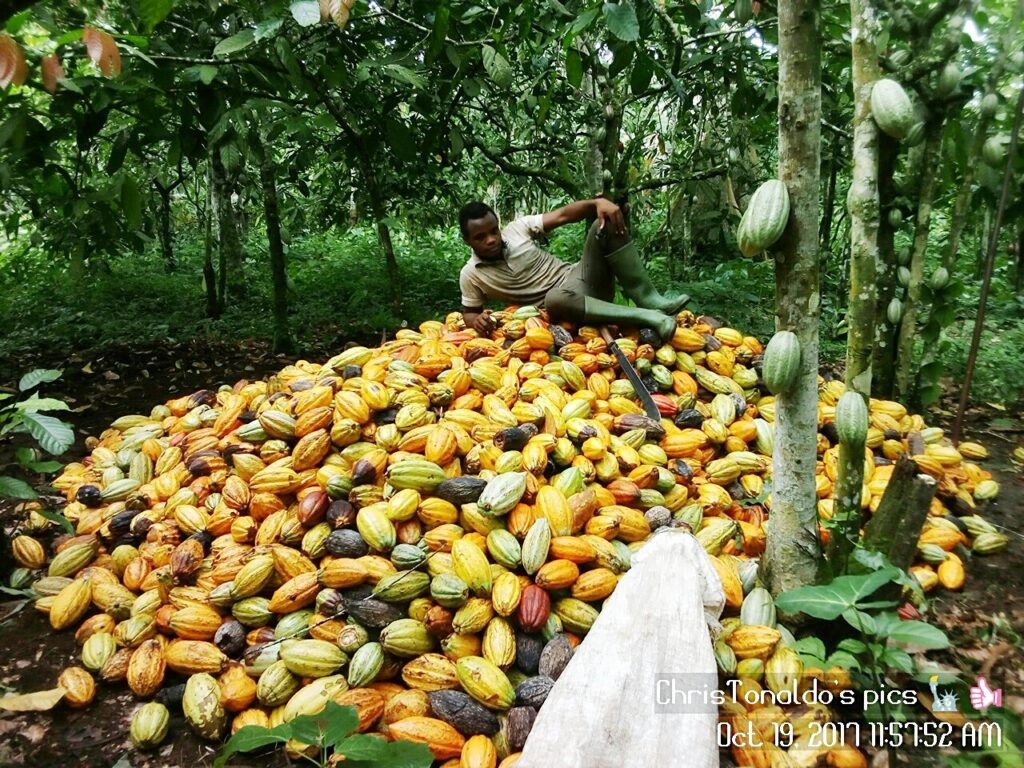
Most of the continent’s population depends on staple crops, food that people need themselves and base their diet on. These include corn, sorghum, rice and wheat as well as potatoes, fruits and vegetables. Cash crops are grown on large plantations and exported to other countries. They include cocoa, bananas and coffee.
In many African countries, food production cannot keep up with the increasing population. This leads to chronic food shortages. Some African countries have turned from food exporters in the last century to food importers today. However, most of them do not have the money and capital to import food from abroad. In addition, climate change and widespread droughts lead to hunger and starvation in many parts of Africa.
Livestock is raised in all parts of Africa. Sheep, goats, camels, pigs and other animals are kept for food, skin and as working and transportation animals.
|
Farmers in Burkina Faso |
Cocoa harvest in Cameroon |

Mining
Africa is rich with minerals and raw materials. The continent has large deposits of copper, gold, phosphates, platinum and minerals. The mining industry focuses on the countries south of the equator. Diamonds, gold and coal are produced in South Africa, which has the most advanced mining industry. Nigeria is Africa’s largest oil-producing country. Bauxite and phosphates are mined in Morocco.
While Africa does have many resources, they do not control the world markets. Most countries do not process raw materials but export them to developed countries. The fight over raw materials has also led to conflicts and wars in Africa. Selling diamonds illegally, for example, helped to finance a civil war in Sierra Leone in the 1990s.
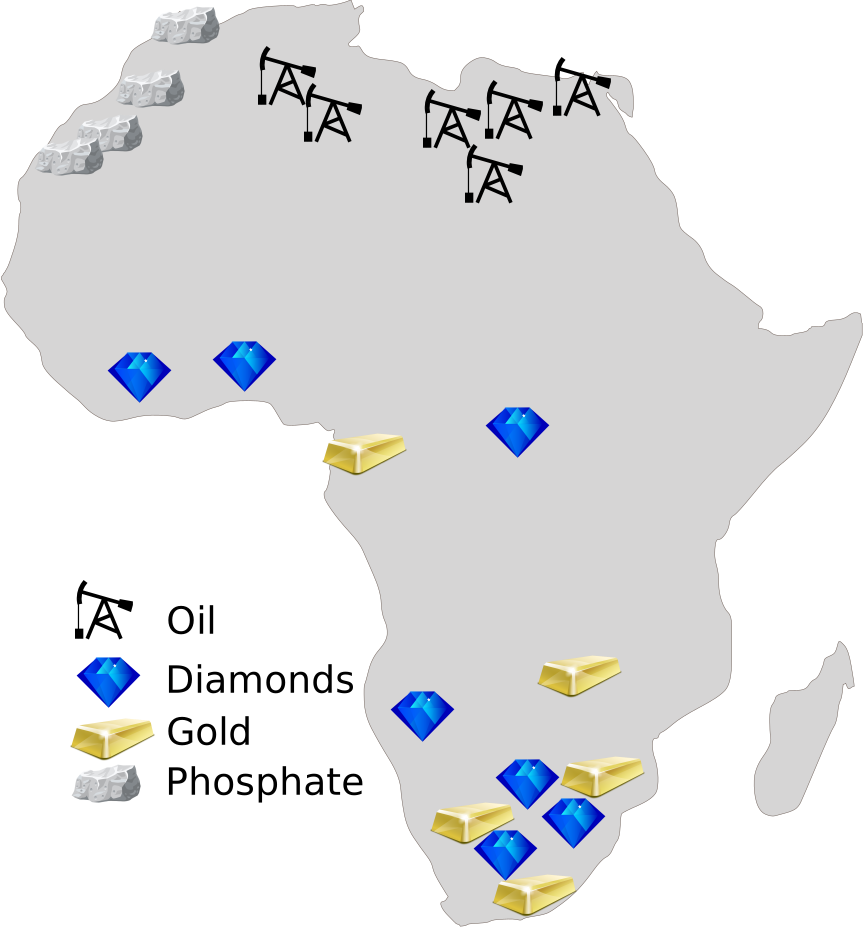
Minerals in Africa
Own work
Source of outline map :
https://creazilla.com/media/clipart/3160467/africa
(Public Domain)
Manufacturing
Industry is a young sector of the African economy. Most industries were set up after the countries got their independence from Europe. During the colonial period they got their finished products from Europe, often at a high price. Many nations still have developing industrial sectors. While foreigners own many companies, the number of young African businessmen opening up firms has increased steadily.
Tourism and Transportation
Tourism is a leading source of income in at least some African countries. Millions of people from around the globe visit the historic sites of ancient Egypt. Others travel to the mountains of eastern Africa or go on a safari in one of the game reserves in Kenya or Tanzania. Conflicts, wars and uprisings during the Arab Spring kept tourists away from Egypt and northern Africa.
Transportation is poorly developed in many African countries. Only the middle and upper classes own cars. Many Africans go on foot or use buses and bikes as a method of transportation. Air transport is well-developed in places that attract tourists, like Egypt and Kenya.
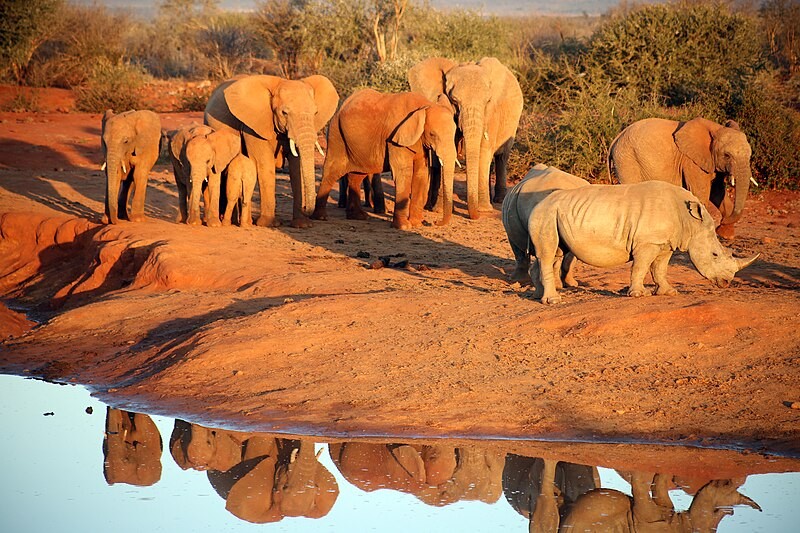
Game reserve in South Africa
Image: flowcomm, CC BY 2.0, via
Wikimedia Commons
.jpg)
Words
- abroad = overseas
- advanced = well-developed
- agriculture = farming
- ancient = old
- base = build, create
- bauxite = soft material that is used to make aluminum
- cash crops = food that is grown in order to be exported and earn money
- century = a hundred years
- chronic = long-lasting
- civil war = war in which two groups of people from the same country fight against each other
- cocoa = powder made from beans and used to make chocolate
- colonial period = time during which European countries governed areas that were far away
- copper = soft reddish brown metal that allows electricity to pass through easily; it is used to make wires and water pipes
- decade = a period of ten years
- deposit = amount
- developed countries = industrialized or rich countries
- developing = growing
- diet = the kind of food that you eat regularly
- drought = long period of dry weather , in which there is not enough water for plants and animals
- earn = get money from the work you do
- economic = about buying and selling products
- economy = system by which a country’s money and goods are produced
- equator = line around the middle of the Earth
- focus on = concentrate on
- foreigner = person from another country
- game reserve = large area of land in which wild animals can live safely
- globe = world
- illegal = against the law
- improve = to get better
- in addition = also
- income = money you get from jobs and work
- increase = grow
- independence = freedom, liberty
- keep up with = here: to be as fast as something else
- leading = number one
- livestock = animals, such as cows, that are kept on a farm
- method = way
- phosphate = kind of salt that has phosphorus in it
- platinum = silver-grey metal that does not change colour; used in industry and for making jewellery
- poorly developed = not very good
- poverty = the situation of being poor
- process = to make a product out of a raw material, so that it is ready to be used
- raise = feed animals so that you can sell them or use them as food
- raw materials = things that exist in nature and are used by people, like coal, wood, oil etc...
- rely = depend on, need
- resources = something like useful land, minerals, oil etc... that a country has
- rich with = has a lot of
- shortage = not enough of something
- sorghum = plant that is grown in tropical areas and used as food for the people there
- source of income = from where you get your money
- standard of living = how rich a person or a country is and what someone can afford
- staple crops = food that you need to live
- steadily = slowly, little by little
- starvation = hunger
- uprising = rebellion
- well-developed = something that works very well
- wheat = plant used to make white bread
- widespread = here: in many places