
Hydrogen
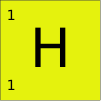
The hydrogen atom is the smallest that we know, and it has a very simple structure: one proton with a positive charge and one electron with a negative charge.
Hydrogen occurs as a gas that you can’t see and can’t smell. It is about 14 times lighter than air. When you combine two atoms of hydrogen with one atom of oxygen, you get a water molecule, H2O. Like nitrogen, hydrogen can also be condensed to a liquid that freezes at – 259 °C (-434 °F) and boils at -252 °C (-423 °F).
Hydrogen is one of the most common elements in our universe. The sun and many stars are made of hydrogen. It can also be found in the Earth’s crust. Hydrogen is in many compounds of animals and plants.
Hydrocarbons are compounds that only have hydrogen and carbon in them, like petroleum, natural gas or plastic.
Hydrogen has many uses. When two hydrogen atoms get together, they form a molecule and give off a lot of heat. That’s why, together with oxygen, hydrogen makes a good fuel. It, for example, powers the engines of space rockets. Power plants use hydrogen to produce energy. There are even cars that run on hydrogen fuel. When you add hydrogen to coal, you can make petrol.

Rockets burn liquid hydrogen and oxygen to lift off
Image: NASA, Public domain,
via Wikimedia Commons

Words
- boil = a liquid becomes hot enough to turn into a gas
- charge = electricity that is put into an electrical object
- combine = put together
- common = can be found very often
- compound = is made up of two or more elements
- condense = if a gas becomes a liquid
- engine = motor, a machine that produces power
- fuel = material like coal or oil, that can be burned to produce energy
- hydrogen = a colourless gas that is the lightest of all elements
- molecule = the smallest unit made up of two or more atoms
- nitrogen = a gas that has no smell or colour ; it forms most of the Earth's atmosphere
- occur = exist
- oxygen = a gas that is in the air and that we need to breathe
- petrol = a liquid that comes from oil; it makes your car drive
- petroleum = oil
- power = to make something run or work
- power plant = a building where electricity is produced
- structure = the way things are connected to each other
- uses = functions; things you can do with it