
History of Tourism
People have been travelling for pleasure since ancient times. In Ancient Egypt, religious festivals attracted people from the whole Nile Valley. Ancient Greeks travelled regularly to the site of their gods. Romans travelled to Greece, Sicily and other places in the empire. Wealthy Romans had second homes near the sea where they spent the summer.
During the Renaissance, educated Europeans embarked on what was called the Grand Tour , a trip to several European countries to enjoy art and architecture.
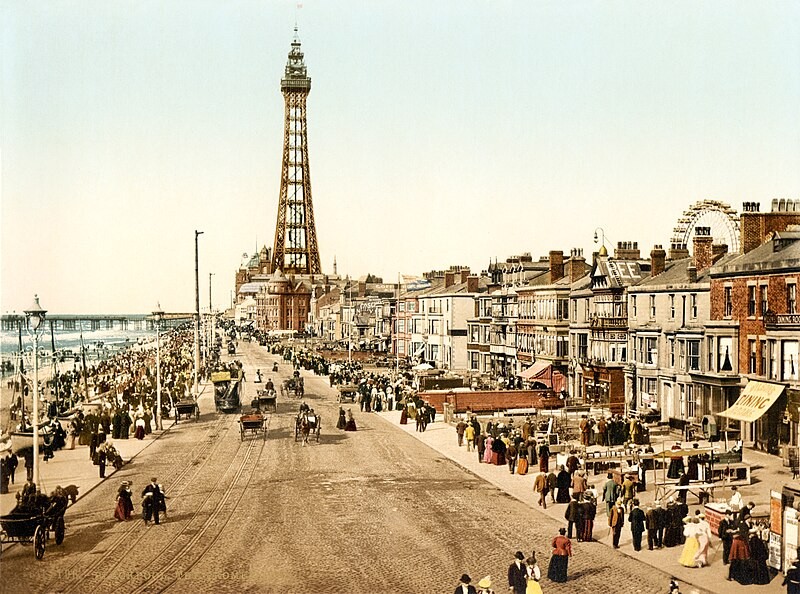
In the 19th century, the invention of the steam engine made it possible for people to travel by boat and train. Regular passenger services from Europe to America started in the 20th century. The rise of the automobile made it possible to travel larger distances by car.
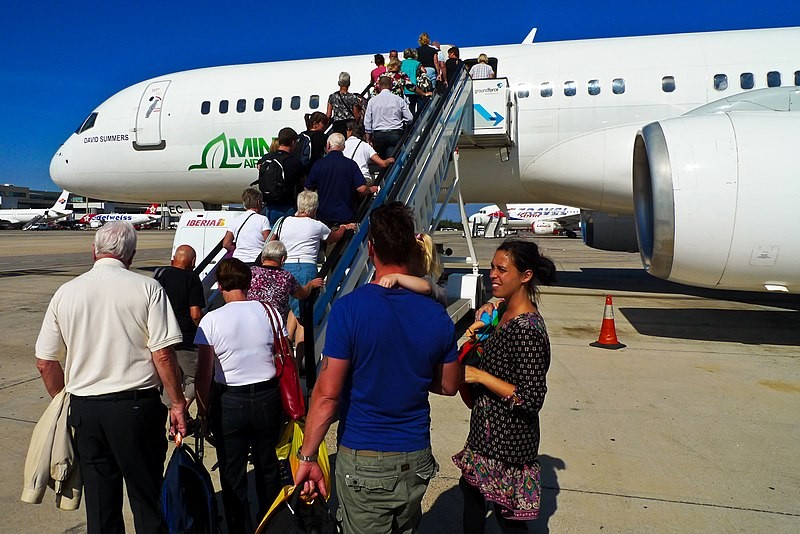
In the 1960s, going on holidays by plane became affordable for many. Jumbo jets of the early 1970s were capable of carrying over 400 passengers and reducing costs of travelling to other continents even further.
|
Promenade in Blackpool, UK at the end of the 19th century |
Tourists boarding a passenger jet |

.jpg)
Words
- affordable = to have enough money so that you can buy the things you want
- ancient times = here: thousands of years ago
- attract = to offer something special so that people go there
- capable = able to
- century = a period of a hundred years
- distance = from one place to another
- educated = to read a lot and know many things
- embarked = went on
- empire = kingdom; many countries ruled by one person
- invention = something new; an object that is produced for the first time
- passenger services = here: ships that carried people
- pleasure = happiness, fun
- reduce = lower
- site = location
- steam engine = motor that works by boiling water
- wealthy = rich