
Main Elements of the Weather
Temperature
Temperature is one of the most important elements in our weather. How warm or cold it is depends on many factors.
The temperature of the air is higher when sun rays hit the earth. Temperatures also vary from season to season. During the summer, the earth’s axis is tilted towards the sun, so the rays of the sun hit us more directly. The days are longer and we get more sunlight.
Temperatures also depend on altitude. It gets colder when you are higher up in the mountains, and it’s warmer near sea level. The temperature decreases about 0.7°C per 100 metres.
Places near the sea usually have more moderate climates than areas far away from the coast. There the summers are very hot and winters very cold.
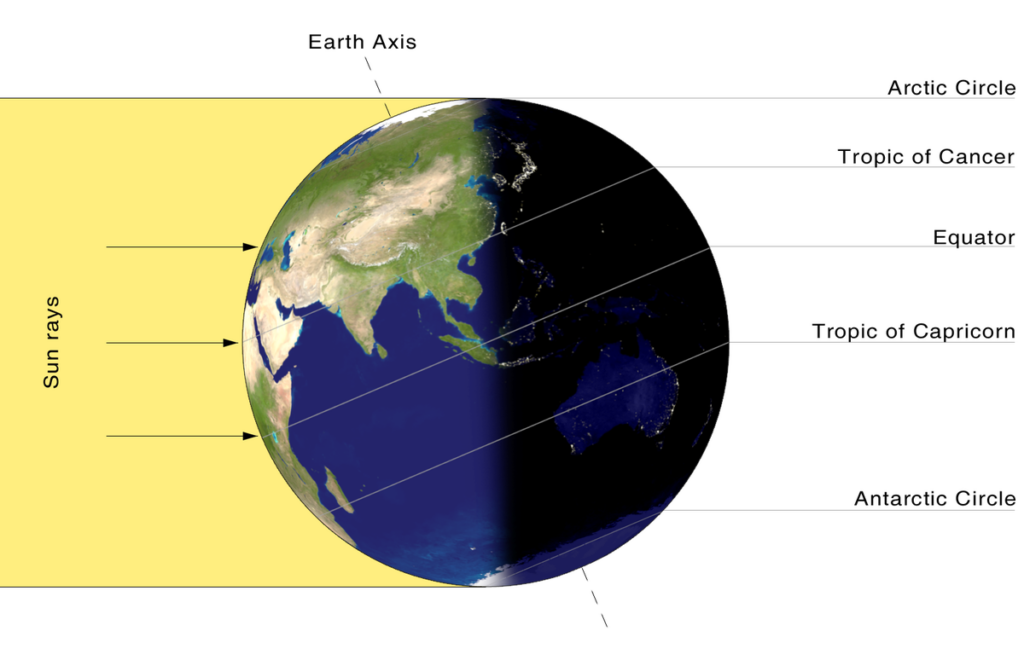
In the summer, the northern half of the earth is tilted towards the sun - leading to higher temperatures
Image: Image by Przemyslaw "Blueshade" Idzkiewicz, CC BY-SA 2.0,
via Wikimedia Commons

Air Pressure
Air pressure is the weight of the air. Cold air is heavier and sinks to the ground, while warm air rises. When air moves, it produces wind. Air moves from high-pressure areas to places where the air is not so dense.
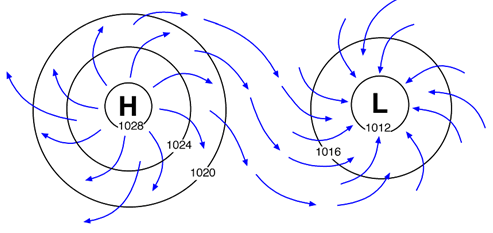
Air moves from high to low pressure areas
Image: Klaus Rosmanitz
Humidity
Humidity is the amount of moisture that is in the air. Warm air expands and can hold more moisture than cold air.
When the air can hold no more moisture, it forms small droplets called clouds.
Meteorologists often measure the relative humidity in the air. That is the amount of water in the air compared to how much water the air at that temperature can really hold. Relative humidity can reach nearly 100%. The air is completely saturated with water.
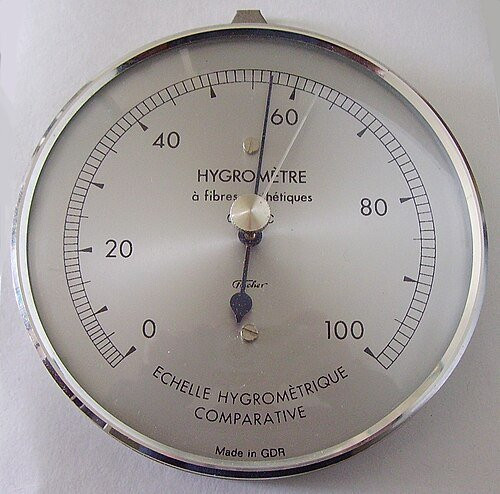
A hygrometer measures the relative humidity
Image: Cjp24, CC BY-SA 4.0,
via Wikimedia Commons

Precipitation
Precipitation is what comes down to earth from the clouds in the atmosphere. The most common forms are rain and snow. Other forms include hail, sleet, drizzle.
The amount of precipitation that a place gets is different and depends on many factors. Areas near the coast get more rain than places in inner regions. High mountains sometimes stop wet air from getting to other places.
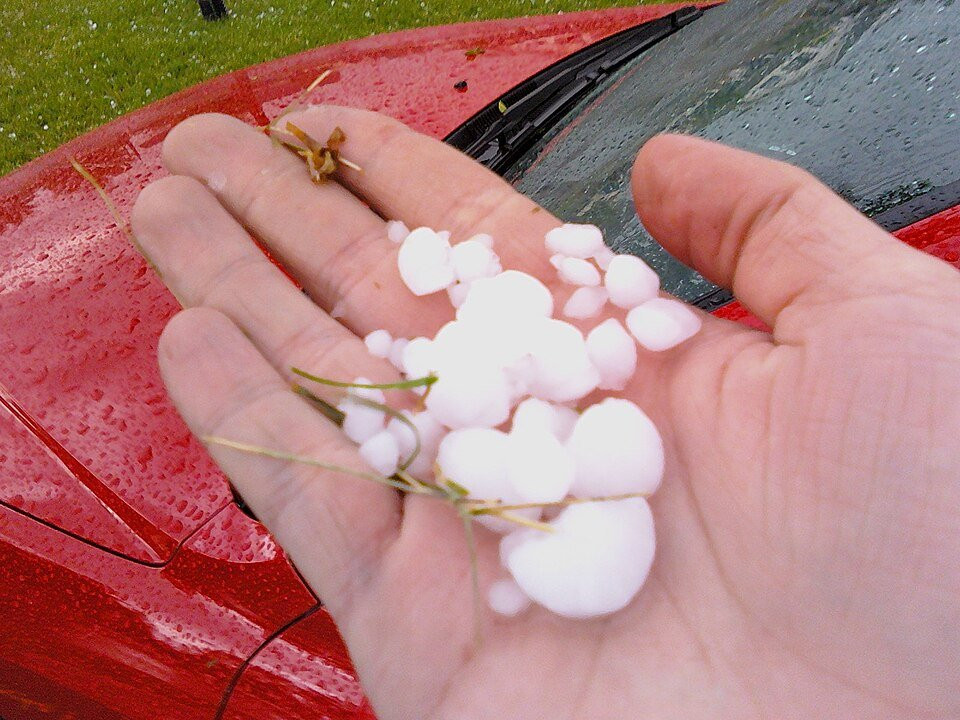
Hailstones in different sizes
Image: Bdahl, Public domain,
via Wikimedia Commons

Words
- altitude = the height of a place above sea level
- amount = how much of something
- axis = the line around which an object turns
- common = well-known
- decrease = go down
- dense = heavy, thick
- depends on = is affected by
- drizzle = weather that is a combination of light rain and fog
- droplet = small drop
- expand = to get bigger
- hail = frozen raindrops that fall down to earth as hard balls of ice
- measure = to find out the amount or size of something
- meteorologist = person who studies weather conditions and the climate
- moderate = not too hot and not too cold
- moisture = small droplets of water in the air
- pressure = force, weight
- rays = lines of light from the sun
- rise = move up
- saturated = full of
- sea level = the average height of the sea, used to measure mountains and other places
- sink = go down
- sleet = half-frozen rain that comes down when it is very cold
- tilt = move
- vary = are different
- weight = how heavy something is