
Electric Currents and Circuits
When electrons move through a conductor an electric current is created. A current that always flows in one direction is called a direct current (DC). A battery for example, produces a direct current. A current that flows back and forth is called an alternating current (AC).
Electrons cannot jump freely through the air to a positively charged atom. They need a circuit to move. When a source of energy, like a battery, is connected to a light bulb the electrons can move from the battery to the light bulb and back again. We call this an electric circuit.
Sometimes there are many circuits in an electrical device that make it work. A TV set or a computer may have millions of parts that are connected to each other in different ways.
You can stop the current from flowing by putting a switch into the circuit. You can open the circuit and stop electrons from moving.
A piece of metal or wire can also be used to produce heat. When an electrical current passes through such metal it can be slowed down by resistance. This causes friction and makes the wires hot. That’s why you can toast your bread in a toaster or dry your hair with warm air from a hairdryer.
In some cases wires can become too hot if too many electrons flow through them. Special switches ,called fuses, protect the wiring in many buildings .
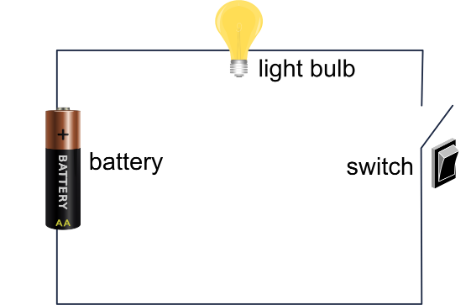
Simple electric current
Image: Klaus Rosmanitz, CC BY 4.0
Words
- back and forth = to go in one direction and then in the other
- charge = the electricity that is put into an object, like a battery, to give it power
- circuit = the complete circle that an electric current travels
- connect = join
- current = a flow of electricity through a piece of metal
- device = machine or a tool that does something special
- flow = move
- friction = when you rub something against something else it gets hot
- fuse = a short piece of wire inside a machine which stops the electricity when there is too much power
- light bulb = a glass object that is inside a lamp - it produces light
- pass through = go through
- resistance = material that stops electricity going through it
- switch = an object that starts or stops the flow of electricity when you press it
- wire = a very thin piece of metal in which electricity can pass through
- wiring = the network of wires in a house or building