
Old Age
Developed countries all over the world have the same problem. Their birth rates are falling and people are getting older. Medical and health care is getting better all the time. We call this an ageing society.
In industrialized countries life expectancy is getting higher and higher. In most European countries women reach an average of over 80 years and men live up to about 78.
We need more and more people who care for the elderly. This means building more old people’s homes and other care units.
The government must spend more money on pensions. This won’t work if we don’t have enough young people who have jobs and pay taxes. More and more people have to work up to 65 and longer. They take away jobs that young adults need.
An older labor force means that we are not as flexible and productive as countries that have young workers.
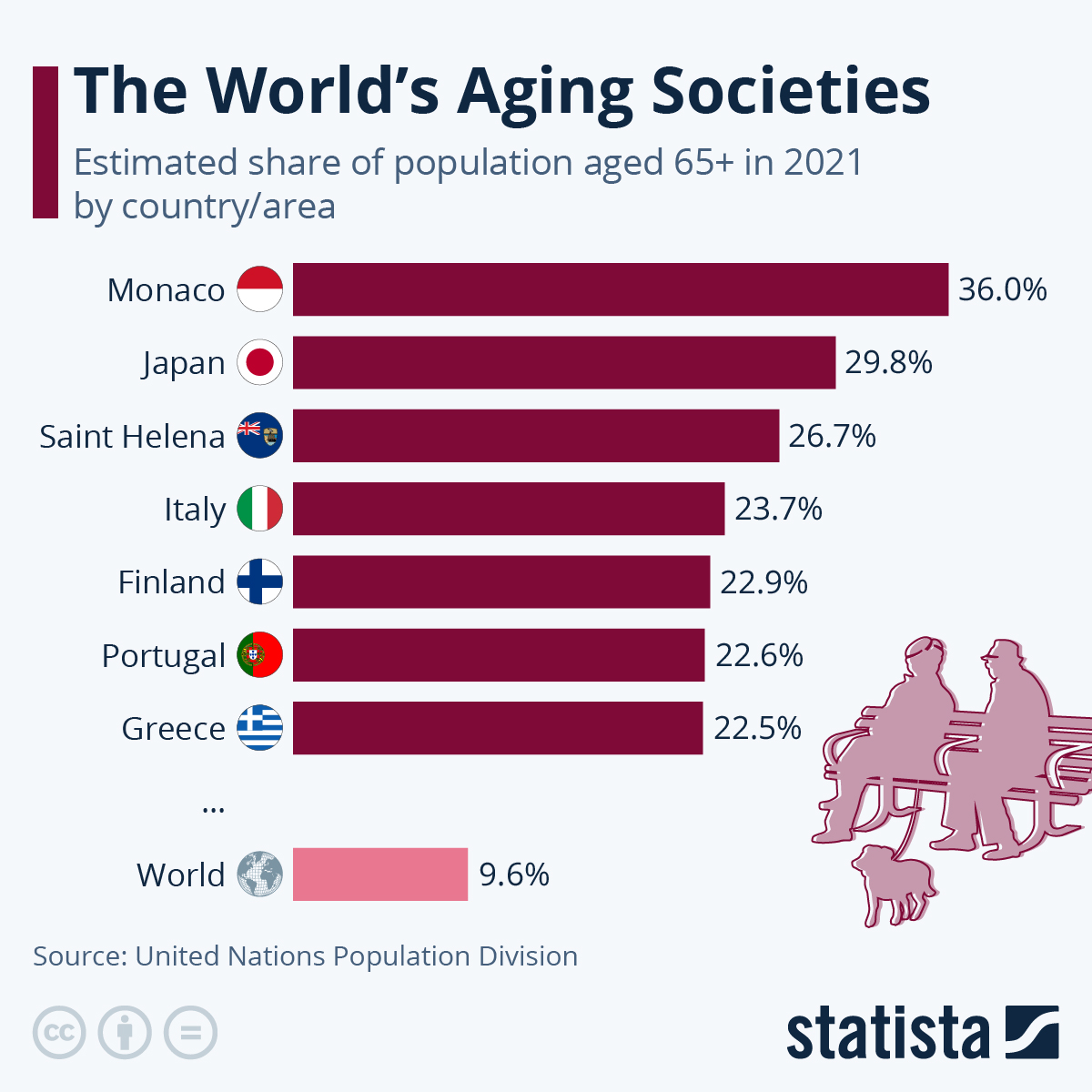 You will find more infographics at Statista
Words
- adult = a grown up
- ageing society = population that is getting older all the time
- average = usual, normal
- birth rate = shows how many babies are born for every 1,000 people in a year
- care for = take care of
- care units = places where people look after you
- developed countries = the richer countries of the First World
- elderly = old
- government = the people who rule a country
- health care = the system that looks after the health of all people in a country
- labor force = all the people who go to work in a country
- life expectancy = the number of years that a person will live when he or she is born
- old people's homes = houses and buildings where old people live and where doctors and nurses look after them
- pension = the money that you get from the government when you are too old to work
- productive = to produce or make a lot
- reach = get to
- tax = the money that you have to pay to the government