
India's Climate
India’s climate is dominated by the monsoon winds. They blow constantly from June to September. Winds coming from the Indian Ocean absorb wet air on their way to the Indian subcontinent. During this period, much of India receives heavy rainfall. The heaviest rain falls in the northeastern part of India, on the foothills of the Himalayan Mountains. In some cases, areas receive many meters of rainfall annually.
The monsoon is very important for India’s agriculture. It brings rain to normally dry areas so that crops like rice and corn can grow there. When the monsoon does not come or comes too late, much of India experiences a shortage of crops and food. During strong monsoon rains, villages, roads and railway lines are often flooded.
During the winter, the monsoon changes its direction and blows as a dry, cool wind from the inner parts of Asia over the Himalayan Mountains to India. From October to February, it can get very cold in the Himalayas.
From March to June, it is dry but hot in India. Temperatures in the desert regions of northwestern India can rise up to 45° C.
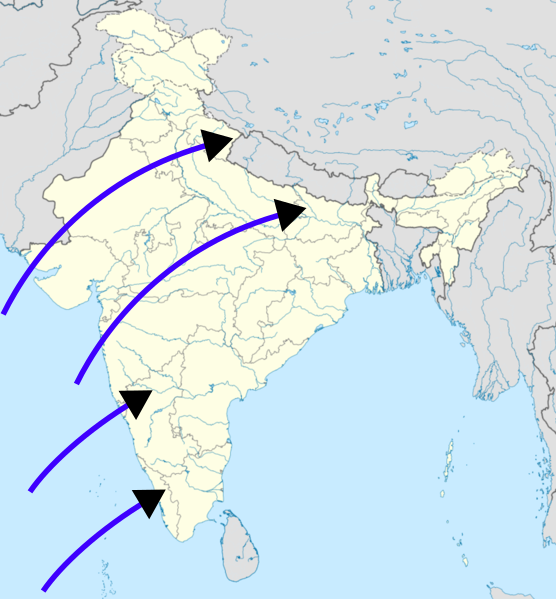
During the monsoon months, wet winds move towards India. They bring heavy rainfall to the Himalayan Mountains. The wet air moves up the mountains where it loses all of its moisture. On the other side of the Himalayas it is dry and warm.
Image (altered) : Wikipedia, CC BY-SA 4.0,
via Wikimedia Commons

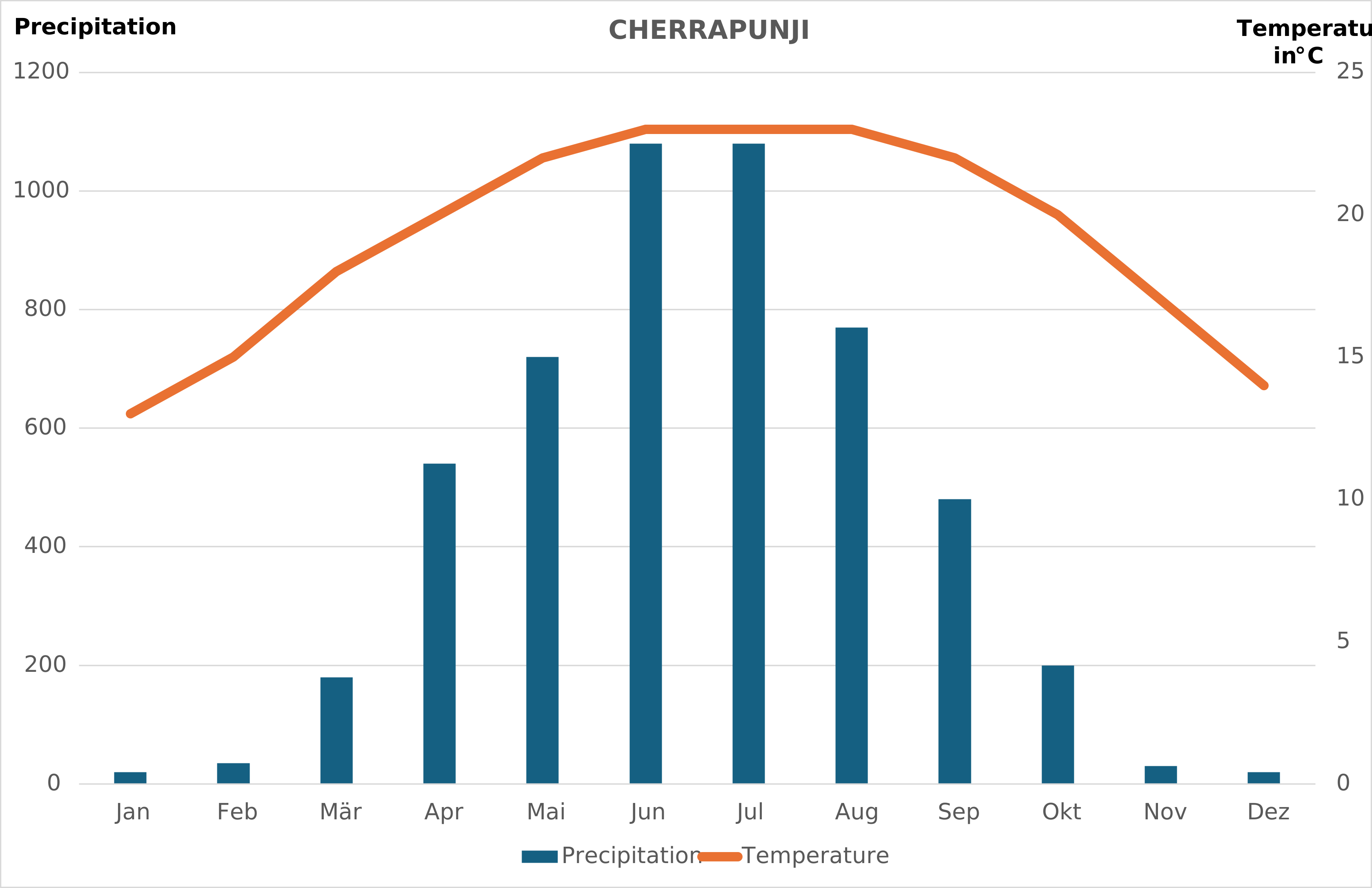
Climate graph of Cherrapunji, located at the foothills of the Himalayan Mountains. It is one of the wettest places on Earth. During the summer, rainfall is more than 1 metre per month.
Image: Klaus Rosmanitz Source : climate-data.org
Words
- absorb = here: take with them
- agriculture = farming
- annually = every year
- constantly = all the time
- crops = plant, like wheat, corn or rice, that is grown by farmers to produce food
- desert = large area of dry land with little or no rainfall
- dominated = controlled, strongly influenced
- experience = here: suffer from
- flood = to cover land with water
- foothills = small hills below a group of high mountains
- located = to be found
- moisture = wet air
- receive = get
- shortage = not enough