
Life During World War II
Resistance groups
Even though most of the population supported the rulers in the Axis countries many people were against them. Resistance groups emerged in almost all the countries that the Axis occupied. These groups worked together in an attempt to overthrow the ruling parties and dictators. They published and distributed illegal newspapers to inform the population. They rescued Allied pilots who were shot down and gathered information about the enemy. Bombing bridges and important roads was also a part of their work.
Some of the work of these groups turned out to be very important in the war. The French resistance helped the Allies during the Normandy invasion in 1944. Yugoslavia had the most effective groups of all. Partisans drove the Germans out of Yugoslavia in 1944.
Even in Germany itself, there was a small underground group that was against the Nazis. In 1944 , a group of German army officers planted a bomb that was to kill Hitler. The bomb exploded near the Fuehrer, but he escaped with minor injuries.
Those who worked against the Nazis risked a lot. If they got caught, they were almost always killed. Sometimes the Germans gathered hundreds of civilians and shot them as an act of revenge.
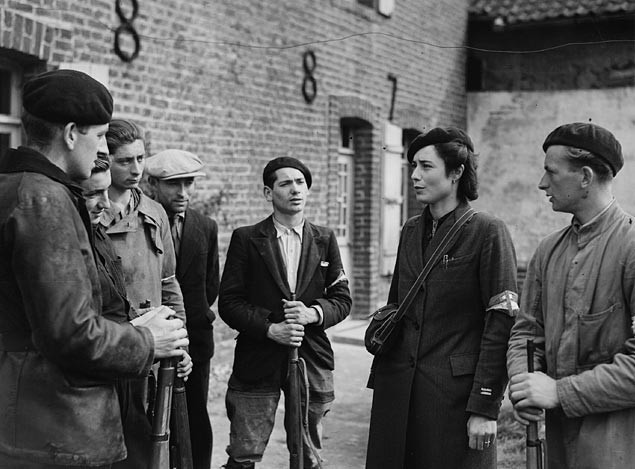
Meeting of a French resistance group
Image: Donald I. Grant, Department of National Defence, Public domain, via Wikimedia Commons

Propaganda
All the nations that were in the war used propaganda to help support their ideas. Radio broadcasts reached many people. Films and posters were also used . In Nazi Germany, Joseph Goebbels controlled the media. He wanted to convince people all over the world that Germany was the most powerful nation and that the Germans had the right to rule the world.
Many Germans listened to radio programmes of the Allies. The BBC broadcast news programmes to the mainland to inform the people of the real situation of the war.
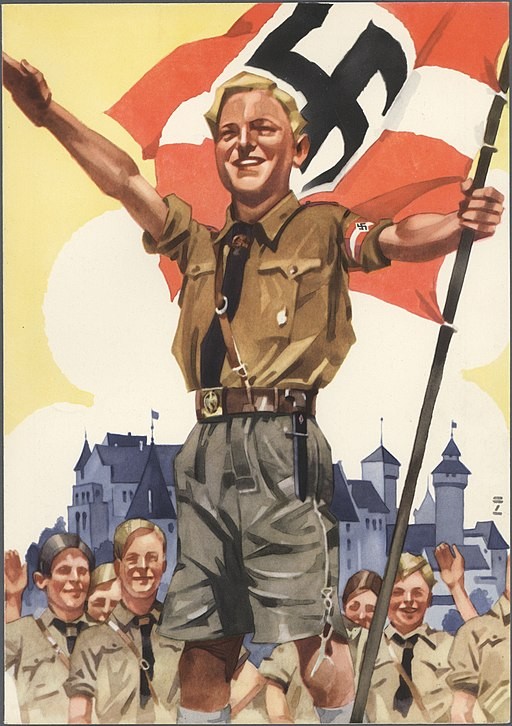
Nazi propaganda poster shows Hitler Youth
Image: Ludwig Hohlwein, CC BY-SA 4.0, via Wikimedia Commons

Life in Germany
Germany's early victories started to make people believe in the war. There was enough food and clothing during the first years, and goods came in from the countries that the Nazis occupied. But the situation changed by 1942. The army was defeated on the Russian front and there were fewer reports of victories to cheer people up. The Allies bombed German cities and towns day and night. Yet the people continued to work for the war.
Everyone was afraid of Hitler’s secret police, the Gestapo. They arrested everyone that was against Nazi beliefs in Germany and other countries.
Life in the United States
In the United States and Canada, most people supported the war. They hated the Nazis and wanted to defeat the Axis powers, especially the Japanese, who bombed Pearl Harbour. America produced an enormous amount of weapons for the war. Old factories were turned into weapons industries, car factories began producing tanks and aircraft.
Millions of women started working in the war production after the men had left for Europe. They worked in shipyards and aircraft factories and replaced men on farms.
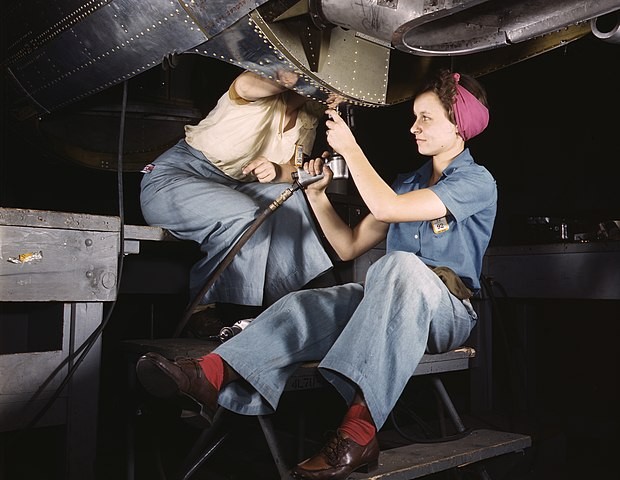
American women working in a factory during World War II
Image: Alfred T. Palmer, Public domain, via Wikimedia Commons

Life in the Soviet Union
Life was especially difficult in the Soviet Union, where intense fighting went on for four years. Stalin ordered his retreating soldiers to burn down everything in their way, so that they didn’t leave anything behind for German soldiers to use. But this also caused great problems for the Soviet population. Millions of civilians died of starvation and diseases.
Words
- act of revenge = something you do to punish someone who has harmed you
- aircraft = airplanes
- Allied = belonging to the countries that fought against Germany and Japan in the war
- amount = number of
- arrest = to take a person to a police station because they may have done something wrong
- attempt = try
- Axis countries = the countries that fought together against the Allies in World War II (Germany, Japan and others)
- BBC = British Broadcasting Corporation = British state radio company
- belief = idea
- broadcast = to send a message or program over the radio
- cause = lead to
- cheer people up = make people happy
- civilian = a person who is not a soldier in a war
- clothing = clothes
- convince = to tell a person that something is right or true
- defeat = to win against
- disease = illness
- distribute = here: to give to the people
- effective = useful, helpful
- emerge = to come up
- enemy = the country you are fighting against
- enormous = massive, a lot
- escape = get away
- especially = above all
- factory = place where goods are produced with machines
- gather = collect
- Gestapo = the secret police force in Germany during the war
- goods = things that are produced so that they can be sold
- illegal = against the law, not allowed
- intense = heavy
- invasion = an army of a country enters another country and takes control of it
- mainland = the main area of a country , without the islands
- media = radio and newspapers
- minor = small
- Nazi = short word for National Socialist
- occupy = to invade a country with an army and stay their for some time
- officer = someone who is in a high position in the army
- overthrow = to bring down; put an end to
- Partisans = group of soldiers who fight against soldiers of a country
- plant = to put into a place
- population = the people of a country
- propaganda = information that is wrong, tells lies or is only part of the truth
- publish = here: bring out
- radio broadcast = program on the radio
- reach = here: listened by
- replace = to take the place of
- rescue = save
- resistance groups = organizations that secretly fight an enemy that controls their country
- retreat = to move back
- rule = to be the leader of
- secret = something that only a few people know about
- shipyard = place where ships are built or repaired
- soldier = a person who fight for their country in a war
- starvation = die because you do not get enough food
- support =
- help
- to be for something
- tank = a heavy military car that moves on a metal belt; it has a large gun on its top
- victory = win
- weapon = object that you use to fight against someone, like a gun or a knife