
How Blood Works In The Body
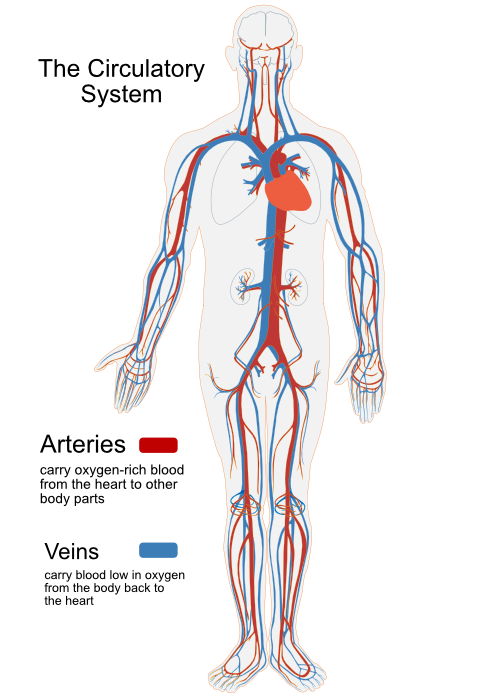
The circulatory system carries blood to all parts of your body. The heart pumps blood through big blood vessels called arteries and veins. In our body, there are also millions of small blood vessels called capillaries. Oxygen, food and other substances pass through the thin walls of these capillaries into the tissue.
When you inhale air, oxygen passes through your lungs and is picked up by haemoglobin which transports it to your whole body. It is released into cells, which produce energy. In return, cells produce carbon dioxide, which enters your blood stream and is transported back to your lungs where it is exhaled.
Food also reaches your body by means of blood. It is digested in your stomach and important substances like fat, sugar, proteins, vitamins and minerals are separated. These nutrients enter your blood stream and are moved to the cells and muscles where they are needed in order to give you energy or fuel. The work of the muscles and other tissue creates heat. Blood is the transporting system which carries heat throughout your body and warms you. The things that you don't need are transported to your intestines and kidneys and leave your body again.
White blood cells play an important role in your immune system. When harmful substances invade your body, an alarm goes off and white blood cells are activated. Then they work to destroy the invaders. They fight off viruses, harmful bacteria and begin anti-body production.
Blood also carries hormones to places where they are needed. When a hormone reaches a part of the body it controls growth, how the body uses food and other things.
You would bleed to death from a small cut if your blood didn't clot. When a blood vessel breaks, platelets rush to the damaged area and stick to one another , forming a plug.

Words
- activate = here: to start working
- anti-body = something that your body produces to fight off diseases
- artery = blood vessel that brings blood from the heart to other parts of the body
- bacteria = very small living things, some of which cause diseases
- bleed = to lose blood if you are hurt
- blood stream = the flow of blood in your body
- blood vessel = one of the tubes through which blood flows in your body
- by means of = through
- carbon dioxide = the gas that is produced when animals or human beings breathe out
- circulatory system = when blood moves around in your body
- clot = to become thicker
- destroy = here: to kill off
- digest = to change food that you have eaten into material that the body can use
- exhale = to breathe out
- fuel = power, energy that makes your body work
- haemoglobin = a red substance in the blood that contains iron and carries oxygen
- harmful = dangerous
- hormone = chemical substance produced by the body that controls growth and other things
- immune system = the system by which the body protects itself from diseases
- inhale = to breathe in
- intestine = a long tube in your body through which food goes after it leaves your stomach
- invade = enter
- kidney = one of the two organs in your back that takes away waste products from your blood and makes urine
- nutrient = chemical or food that gives you what you need to grow
- oxygen = gas that is in the air and which we need to breathe
- plug = here : an object that stops blood from getting out
- protein = a substance that is in food like meat, eggs and beans and which your body needs to grow and stay strong
- reach = get to
- release = to set free
- rush = hurry
- separate = to divide, split apart
- stick = to hang on to
- substances = material
- throughout = in all of
- tissue = the body material that is formed by cells
- vein = blood vessel that brings blood from parts of the body back to your heart