
Humanism
The printing of books led to a new way of thinking. Scholars of the Renaissance returned to the writings of Greek and Roman philosophers. These writings are called the “classics”. More and more scholars learned to read Greek and Latin and studied old manuscripts on topics like science, art and life.
During the Middle Ages people were guided by the church, which was against wealth, trading goods and other worldly interests. Humanists, however, did not believe that much in religion. They thought that money and trade were important in life and that citizens needed a good general education.
During the Renaissance a churchman named Martin Luther changed Christianity. In 1517 he wrote a list of things that he didn’t like about the church and posted them on the door of his church in Wittenberg, Germany.
Luther also wanted the church to hold masses in German instead of Latin so that people could understand them better. Many other Christians agreed that the church was in need of change. Luther and others founded new religions and separated from the Roman Catholic church.
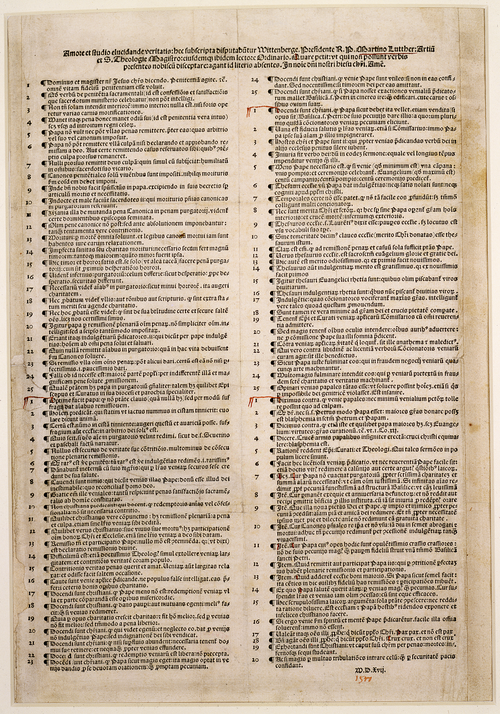
Martin Luther’s 95 thesis on what he didn’t like about the Roman Catholic church
Image:Martin Luther, Public domain,
via Wikimedia Commons

Words
- Christianity = religion based on the life and beliefs of Jesus Christ
- citizen = someone who lives in a city or a country and has all the rights there
- found - founded = create
- general education = you learn many things in different subjects
- goods = products
- guide = lead
- in need of = something is very necessary
- mass = church ceremony, mostly on Sundays
- philosopher = a person who studies ideas about nature , truth, good and evil
- post = to put on
- scholar = an intelligent person
- science = what we know about nature and the world by looking at the facts
- topic = subject
- trade = to buy and sell things
- wealth = being rich
- worldly = about normal life and not religion