
Printing
In 1445 the German Johannes Gutenberg invented the printing press. He changed the lives of millions of people throughout Europe. For the first time, bookmaking became cheap, and Gutenberg was able to print many books very quickly.
In the Middle Ages books were very expensive because they were written by hand. Only priests and monks could read them because most of them were in Latin.
In the Renaissance the middle classes had the money to buy books, but they wanted books that they could read in their own language. A publishing boom broke out and buying and selling books began to prosper in many European countries. People bought travel books, romances, poetry and almanacs. They read more and became better educated.
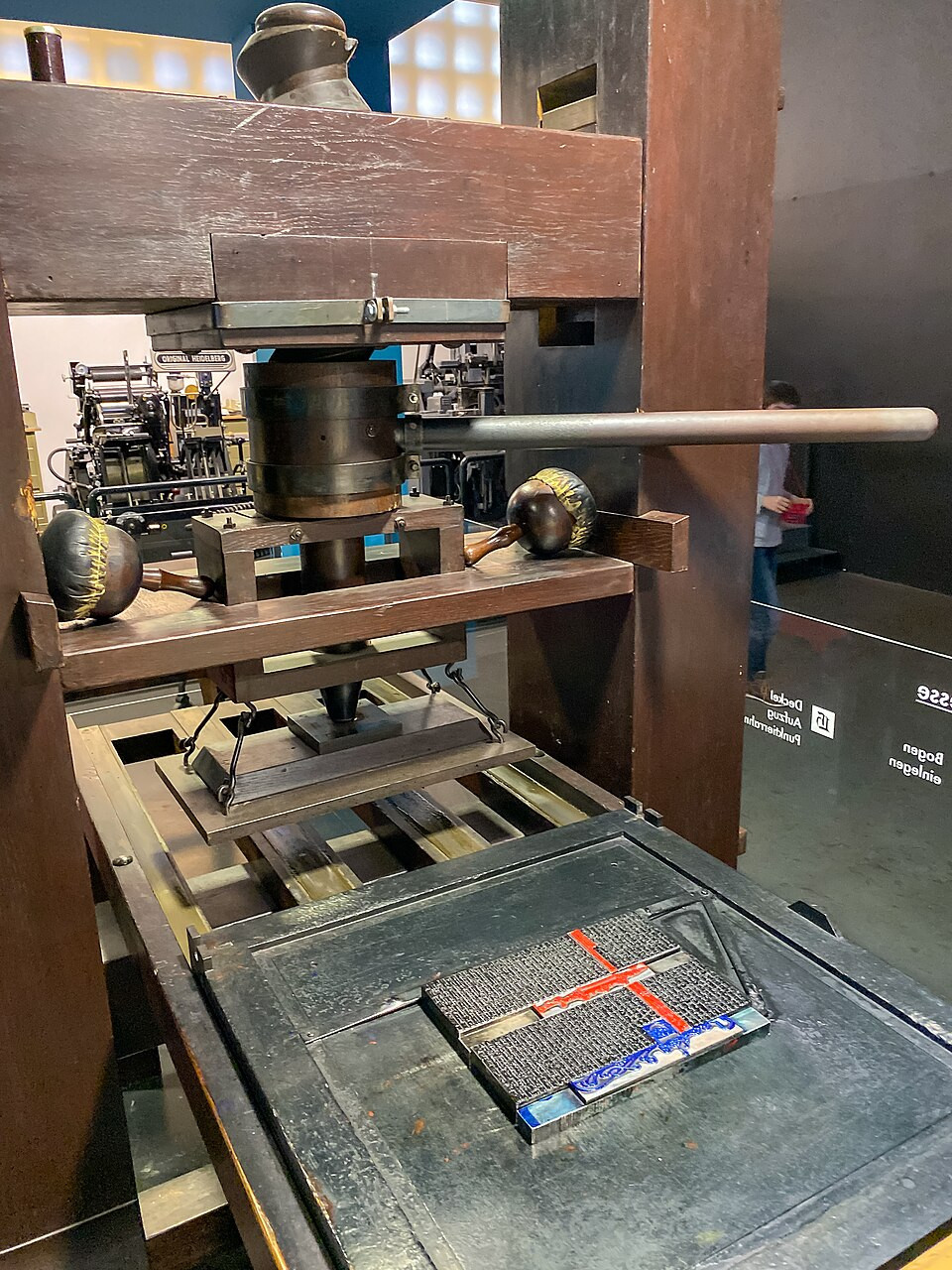
Gutenberg printing press
Image:dronepicr, CC BY 2.0,
via Wikimedia Commons
.jpg)
Words
- almanac = a book that is written every year and has information about many things
- invent = to make something new
- monk = a man who lives in a religious group with others, usually in a monastery
- poetry = poems
- priest = person who performs ceremonies in church
- printing press = a machine that prints newspapers and books
- prosper = grow, become popular
- publishing boom = a lot of books were sold, and many people bought them
- romance = a love story
- throughout = in all of