
The New Middle Class
When the plague slowly faded away in the 15th century, the population in Europe began to grow. A new middle class emerged —bankers, merchants and tradespeople had a new market for their services.
People became wealthier and had more than enough money to spend. They began to build larger houses, buy more expensive clothes, and started to show interest in art and literature.
The middle-class population also had more free time, which they spent learning foreign languages, reading, playing musical instruments, and studying other things of interest.
The Renaissance was especially strong in Italian cities. They became centres of trade, wealth, and education. Many cities, like Venice, Genoa and Florence had famous citizens who were very rich and gave the city a lot of money.
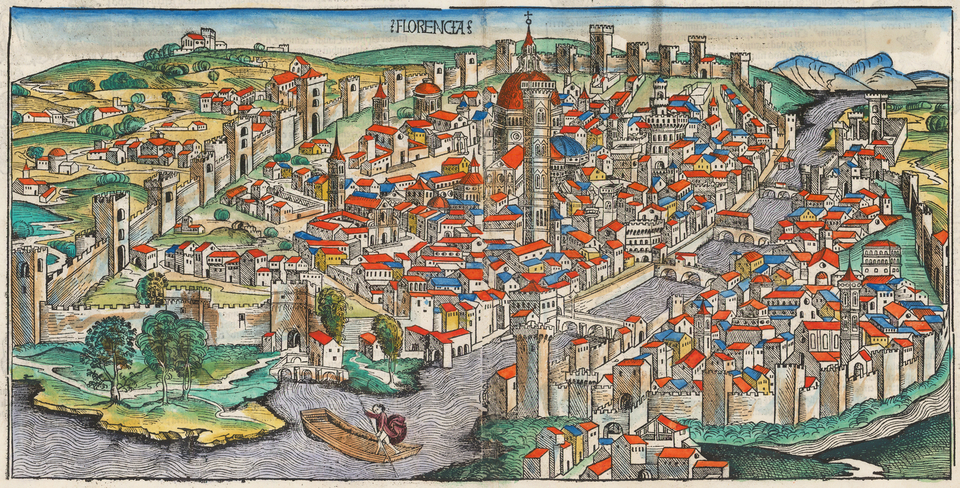
Florence in 1493
Image: Michel Wolgemut, Wilhelm Pleydenwurff (Text: Hartmann Schedel),
Public domain, via Wikimedia Commons

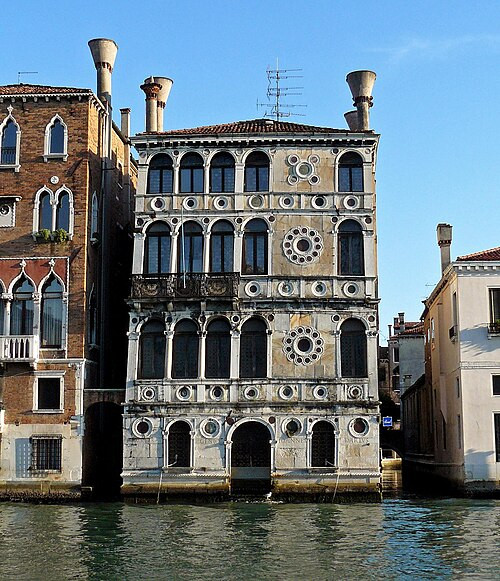
Palazzo Dario in Venice
Image: Iain99, Public domain,
via Wikimedia Commons

Words
- century = a period of a hundred years
- citizen = someone who lives in a city or a country and has all the rights there
- emerge = come up, appear
- especially = above all
- foreign = from another country
- merchant = a person who buys and sells things
- plague = an illness that leads to death and spreads very quickly
- services = work that you do for someone
- trade = to buy and sell things
- wealth = being rich
- wealthy = rich