
The World Wars and the Great Depression
During World War I and in the years that followed, more and more Blacks started to move to the cities of the North where they expected to find a job and lead a better life. Most of them, however, were disappointed because they were not educated and didn't have the skills that they needed. Slums and black ghettos developed in the inner cities throughout the northern United States.
The Great Depression, which began after the stock market crash of 1929, hit the black population harder than the whites. President Franklin D. Roosevelt's New Deal Programme did a lot to help Blacks.
World War II opened up new opportunities for Black people. About a million men joined the army and served for their country - mostly in all-Black units. As time went on, more and more Blacks succeeded in getting a higher position in the army. Some of them even became pilots and officers.
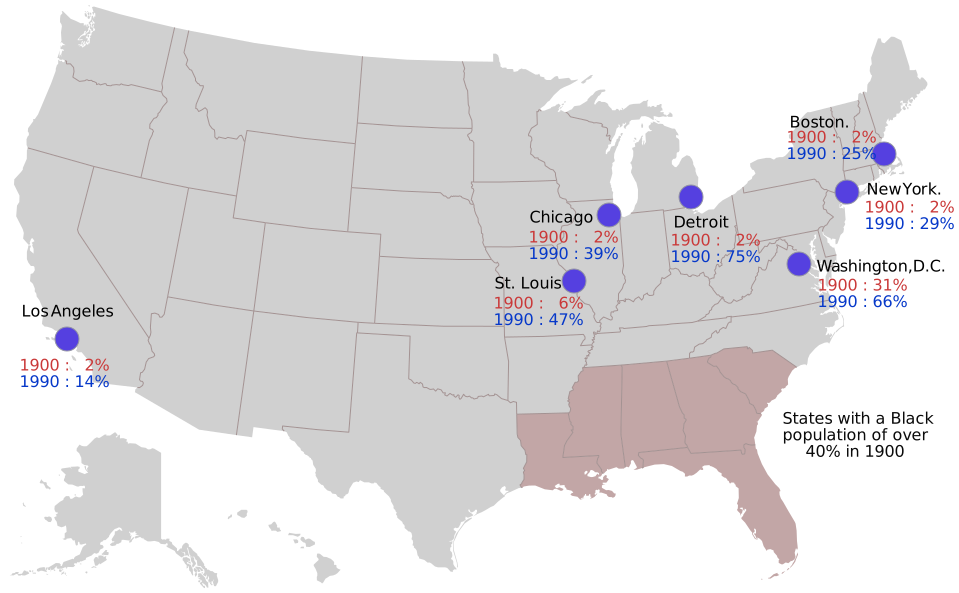
Percentage of Black population in US cities (1900 and 1990)
Image (modified) : Heitordp, CC0, via Wikimedia Commons
Data Source : US Census Bureau
.svg)

African American pilots in World War II
Image: USAAF, Public domain,
via Wikimedia Commons

Words
- develop = grow
- disappointed = to be sad
- educate = to go to school and learn basic things
- ghetto = a part of a city in which poor people of a certain group or race live
- Great Depression = the time after the Wall Street crash of 1929 ; the 1930s
- join = to become a member of
- lead = have
- New Deal Programme = the laws that Franklin D. Roosevelt made to help the economy
- officer = someone in a high position in the army
- opportunity =chance
- serve = here: to do useful work for your country
- skills = something that you can do well because you have learned it
- stock market = place where you buy and sell parts of a company
- succeed = to do what you have always wanted to do
- throughout = in all of
- unit = group