
Hurricane Katrina
On Monday, August 29, 2005 Hurricane Katrina hit the American coast near New Orleans. The storm had formed over the Caribbean Sea almost a week earlier. As it moved on towards the American coastline it grew more and more powerful. It became a Category 5 hurricane and the fourth largest storm that has ever been recorded in the Atlantic Ocean. Winds reached speeds of over 340 km an hour. Although the centre of the hurricane did not pass directly over New Orleans most of the city was flooded by the storm.
New Orleans is located in a really dangerous area. It lies above the Gulf of Mexico where many storms and hurricanes pass through. The Mississippi River also runs through the middle of the city. Because most of New Orleans lies below sea level, high banks of earth, called levees, were built around the city to protect it from flooding. Thousands of pumps have been installed to drain the water away.
Katrina brought along heavy rainfall and parts of the levee broke. About 80 % of the city was flooded. Shortly before the storm hit New Orleans about 20,000 people were able to escape to the Superdome, one of the town’s largest stadiums.
Most of the city’s population was evacuated , but about one hundred thousand had to stay behind, mostly poor people and blacks who had no cars and couldn’t get out. They were trapped in the floods for days without power and water.
In the days after the disaster chaos spread throughout New Orleans. People broke into shops and stole things they needed, like food and water. Violence increased and gun shots could be heard throughout the city. Many people were trapped on rooftops for days before they got any help.
The government and the city authorities were not very well prepared for such a disaster. There were no plans for getting people out of the city. President Bush waited for four days before he visited the region. Thousands of people died in one of the biggest catastrophes in American history.
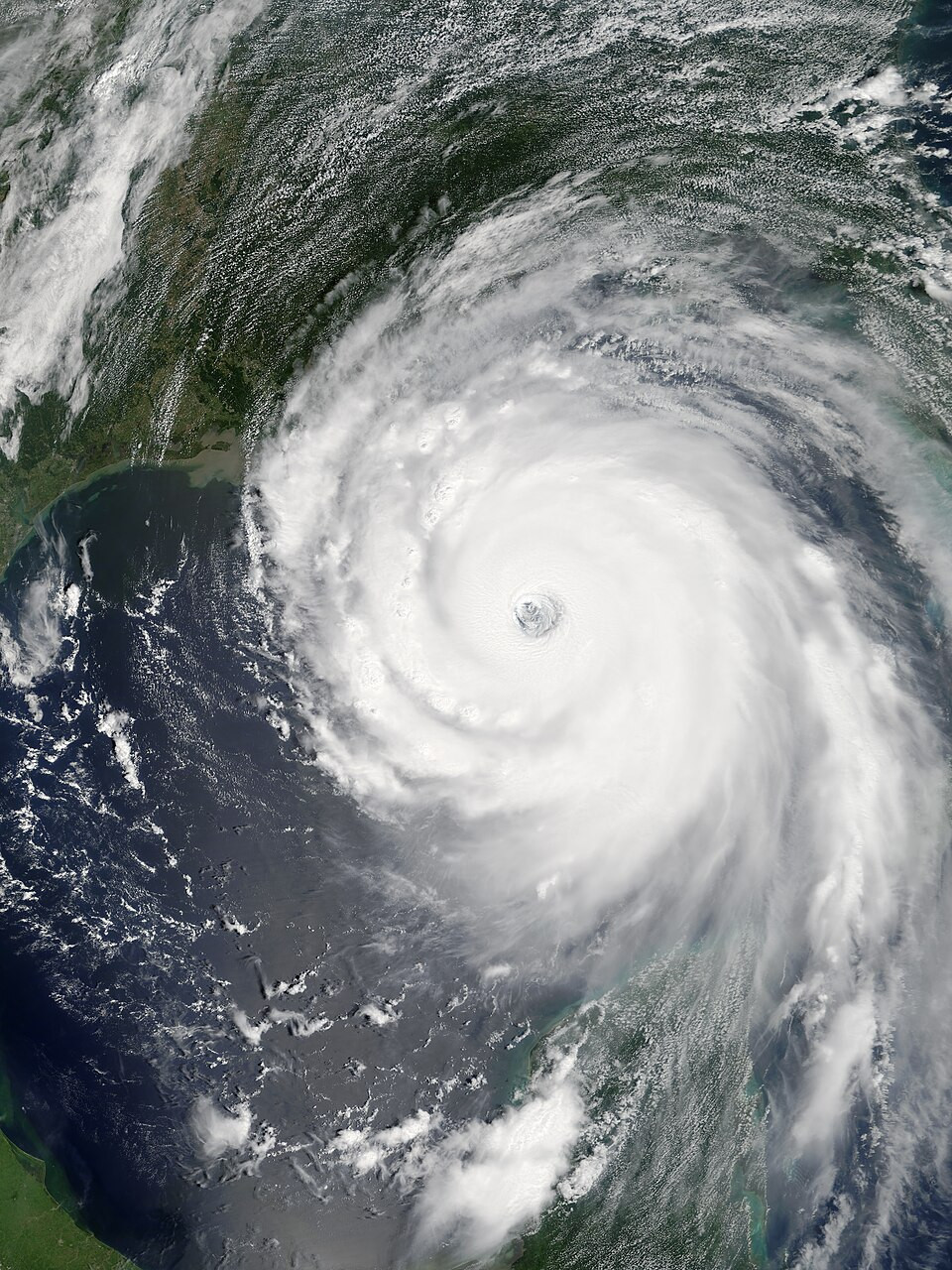
Hurricane Katrina on August 28, 2005
Image: NASA, Public domain,
via Wikimedia Commons
Words
- although = while
- authorities = the people or organizations that have the power to make decisions
- bank = a high area
- catastrophe = disaster, tragedy in which many people are killed
- coastline = place where land and water come together
- disaster = something that happens by surprise and causes a lot of damage
- drain = to make the water move away from something
- escape = to get away from a dangerous place
- evacuate = to bring people away from a dangerous place to where it is safe
- flood = when land is covered by water
- government = the people who rule a country
- increase = to become bigger and larger
- install = set up, make ready to work
- levee = a special wall that is built to stop flooding from a river
- located = lie, can be found
- pass = travel over or by
- population = the people of a city or town
- protect = guard , defend
- record = write down information
- sea level = the average height of the sea ; it is the basis for measuring other heights like mountains etc..
- speed = how fast something is
- spread = to move to other places
- throughout = in all of
- trap = to be in a bad and dangerous place where you cannot get out
- violence = aggression, fighting