
Polar Deserts
Completion requirements
Polar deserts are the cold and dry areas of the Arctic and Antarctic. They make up a total of 27 million square km or about a fifth of the world's landmass.
Most of the water in these regions is in the form of frozen ice sheets or glaciers. Temperatures drop as low as -80° in the winter months, the warmest months have an average temperature that is lower than +10°C. The air holds very little moisture. These regions get less than 200 mm of precipitation per year, almost entirely in the form of snow,
Very few plants and animals can survive in polar deserts.
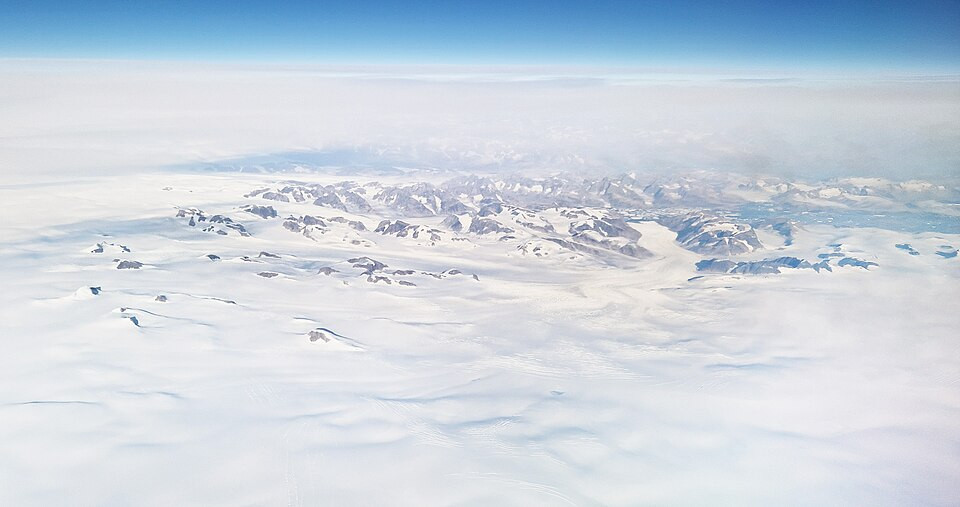
Ice Sheet over Greenland
Image: Renée Kools, CC BY 4.0,
via Wikimedia Commons

Words
- average = normally, usually
- entirely = all of it
- glacier = a large mass of ice which moves slowly down a mountain valley
- ice sheet = a plateau-like area that is covered with masses of snow
- landmass = area of land
- moisture = small amounts of water in the air
- precipitation = rain or snow that falls to the ground
- survive = here: exist, live in extreme conditions