
The Sahara Desert
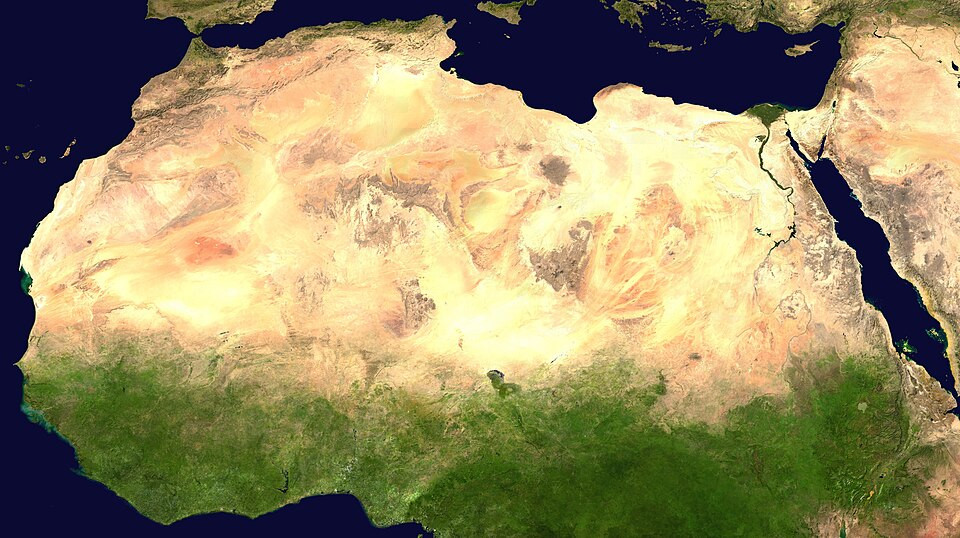
The Sahara is the biggest desert in the world . The landscape is made up of mountain ranges, rocky plateaus and sandy plains called ergs. The Nile is the only river that carries water all year long. It flows through the Sahara in Sudan and Egypt.
The desert reaches from the Atlantic Ocean in the west to the Red Sea in the east –over 3,500 km. The highest peaks are in the Tibesti mountains . They reach a height of about 3,500 metres. There are about 90 bigger oases in the Sahara, where water comes up from underground rivers or wells. People here live in small villages and grow crops.
The Sahara also has important raw materials. Oil and gas lie under the Algerian and Libyan desert. There are also other minerals ,like copper and iron ore.
About 2 million people live in the desert. Most of them are Arabs or Berbers. The Tuareg are a tribe that live in the mountainous areas of the central Sahara. Most of them are nomads who raise sheep , goats or camels and travel around all year.
In oases people can live the whole year. They grow dates, wheat and other crops. But, they must also fight against sand storms and wandering dunes that threaten to cover the oases with sand.
The Sahara was not always a desert. During the Ice Age , when many parts of the world were covered with snow and ice, northern Africa had a much wetter climate. The Sahara had many lakes and rivers and elephants and giraffes lived in the grasslands and forests. At about 5000 BC the climate started to become drier and the Sahara turned into a desert. Many people moved south .
Today the desert is growing because people destroy fertile land. They raise too many animals that eat all the grass or they cut down trees that still exist.
 #
#
Satellite image of the Sahara desert
Image: NASA, Public domain,
via Wikimedia Commons

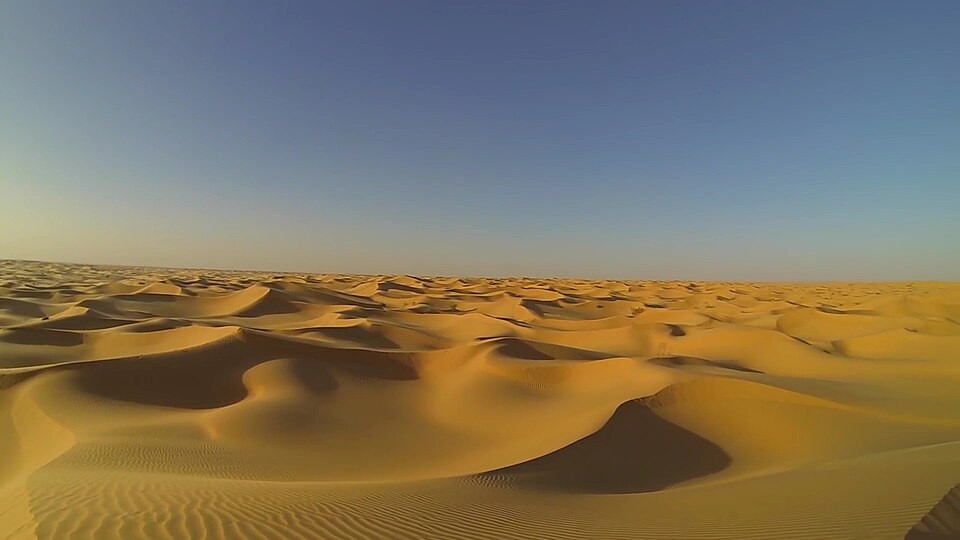
Sand dunes in the Algerian desert
Image:Fiontain, CC BY-SA 4.0,
via Wikimedia Commons

Words
- BC = before the birth of Jesus Christ
- Berbers = group of people who live in northern Africa
- copper = soft , reddish- brown metal used for wires
- cover = to spread over
- crops = a plant like wheat or corn that farmers grow for food
- date = a sweet, sticky brown fruit with a long hard stone inside
- destroy = damage completely, ruin
- fertile = good, productive
- height = how high something is
- iron ore = rock which has iron in it
- landscape = an area or countryside of a special type
- mountainous = with a lot of mountains
- mountain range = group of mountains , mostly in a single line
- nomad = a person who travels from place to place to find grass and water for animals
- oasis - oases (plural) = a place with water and trees in a desert
- peak = the top of a mountain
- plains = a large area of flat land
- plateau = a large area of flat land that is higher than the land around it
- raise = to look after animals and feed them
- raw materials = things that exist in nature and which we use every day, like coal, oil, water
- threaten = endanger; put at risk
- tribe = a group of people who have the same skin colour, language and religion. They live in a small area
- wandering dunes = mountains of sand that move from one place to another
- well = a deep hole in the ground that has water in it
- wheat = a plant that you make white bread from