Languages in Our World
There are about 7000 languages spoken in our world today. Only very few are so called world languages, widely spoken by millions of people. The rest are local languages that are only spoken in certain areas. The most common languages are Mandarin Chinese, English and Spanish.
Almost all countries have an official language that is used when you go to authorities or which is taught in school. Sometimes a country may have second languages that have developed through the ages. In India, Hindi is the official language, but most Indians can speak English quite well because of its history as a British colony. In Canada, English and French are recognized as official languages. In Switzerland, people speak German, French and Italian.
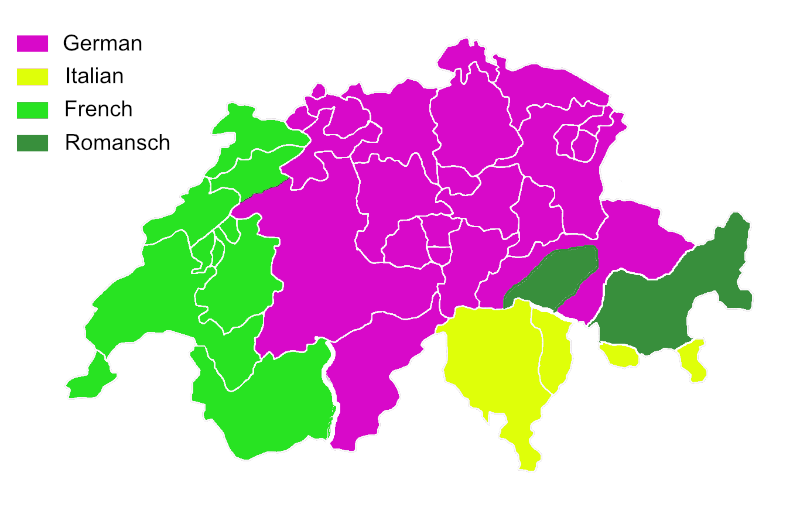 Languages of Switzerland
Image: The original uploader was Ojw at English Wikipedia., CC BY-SA 3.0,
via Wikimedia Commons

Within a country, people often speak dialects of the same language. In England, different dialects of Standard English are spoken between London in the south and Scotland in the north.
Languages that are related to each other form groups. Germanic languages are English and German, as well as the Scandinavian languages. French, Italian and Spanish are Romance languages. All of these belong to the Indo-Germanic language family. Chinese, on the other hand, belongs to the group of Sino-Tibetan languages.
Some societies also have minorities who do not speak the official language. Especially in countries in which immigration has played an important part in history, you can find several spoken languages. In the United States Spanish is the most common language next to English, but there are hundreds of thousands who speak Polish, Russian or Italian because their families have come to the US during some point in history.
All over the world, millions of translators translate one language into another. Such people are especially needed in international organizations, like the United Nations or the European Union.
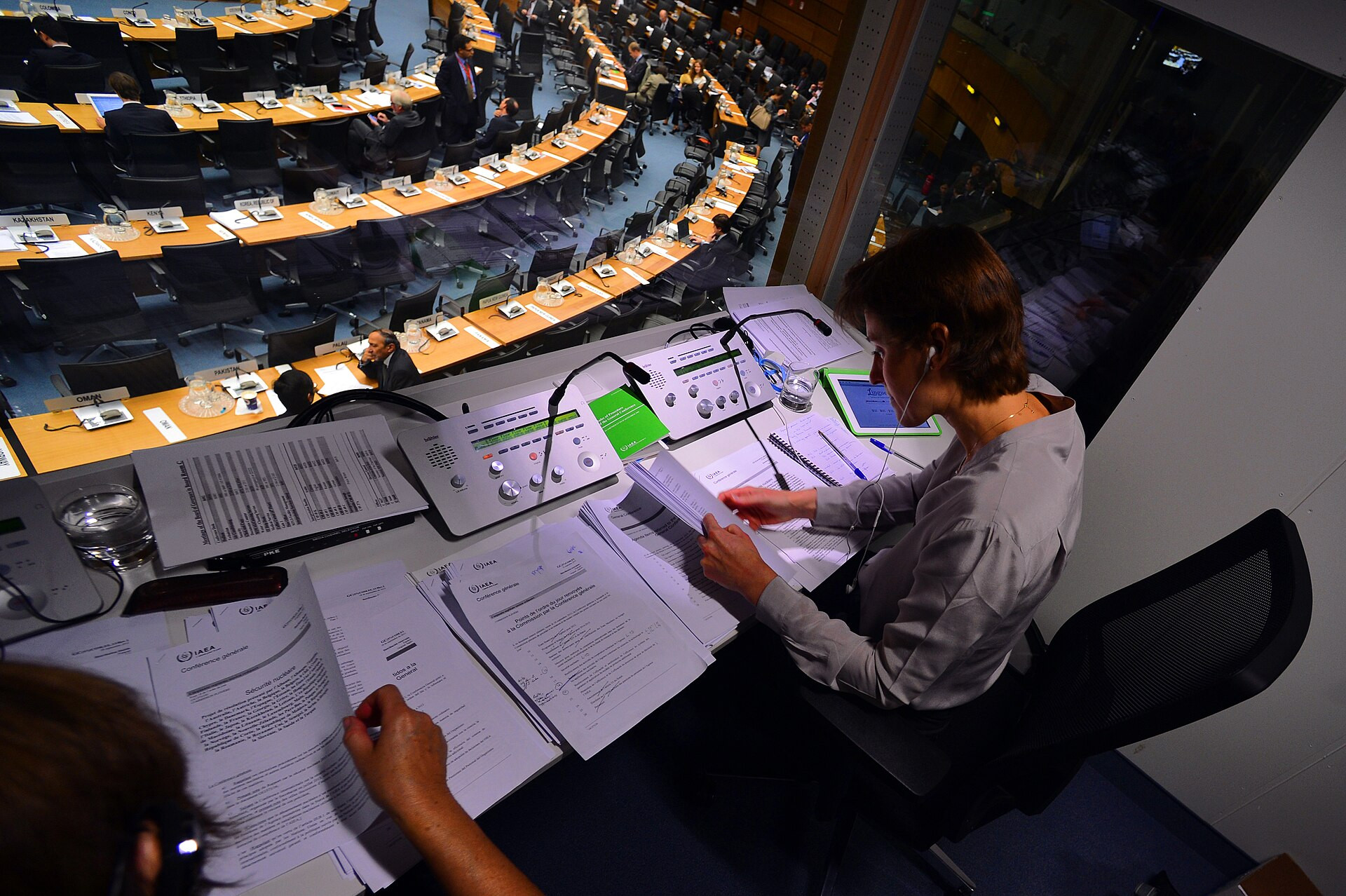
Interpreters at an IAEA conference in Vienna
Image:IAEA Imagebank, CC BY-SA 2.0,
via Wikimedia Commons
_(9840848393).jpg)
Words
- authorities = organization or government department that has the power to do things and make decisions
- colony = faraway country or area that a larger country controls
- common = popular, widespread
- develop = grow
- dialect = form of a language spoken only in one area; the words and grammar are a bit different than the normal language
- especially = above all
- few = not many
- immigration = going to another country to live and work there
- local = only in a small area
- minority = small group of people within a larger group
- official = here: the main language
- point = time, phase
- recognize = accept
- related to = belong together
- several = many
- society = people in general, who live together in a country
- Standard English = the official English language, spoken by most people
- through the ages = over history
- translate = change written and spoken words from one language into another
- widely = generally, mostly