
Cultural Regions Of Native Americans
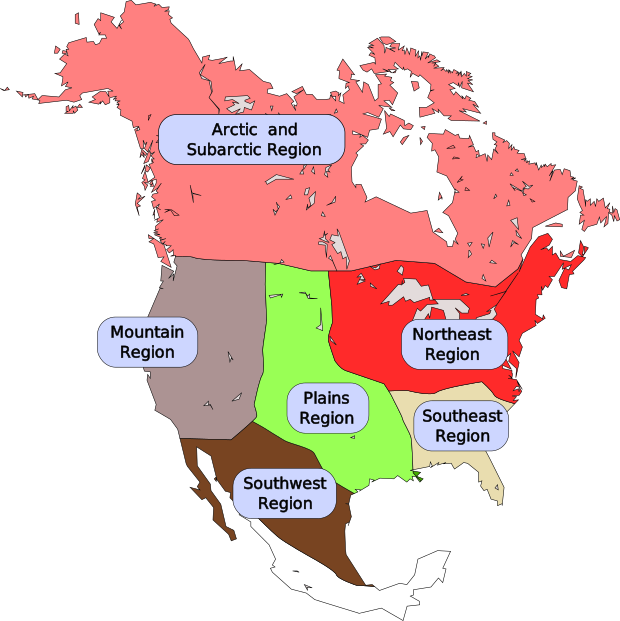
Cultural Regions of Native Americans
Image: own work
Map source : Heraldry, CC BY-SA 3.0,
via Wikimedia Commons

The Arctic and Subarctic
Arctic and Subarctic inhabitants probably came to Alaska and Canada from northern Siberia about 10,000 years ago. They are also called Inuit.
They got food by hunting deer and sea mammals like seals and whales. Houses were made of animal skin or wood that came from nearby forests.
Indians travelled mostly across the lakes and rivers of the Arctic. They used toboggans and snowshoes to travel when the lakes and rivers were frozen.
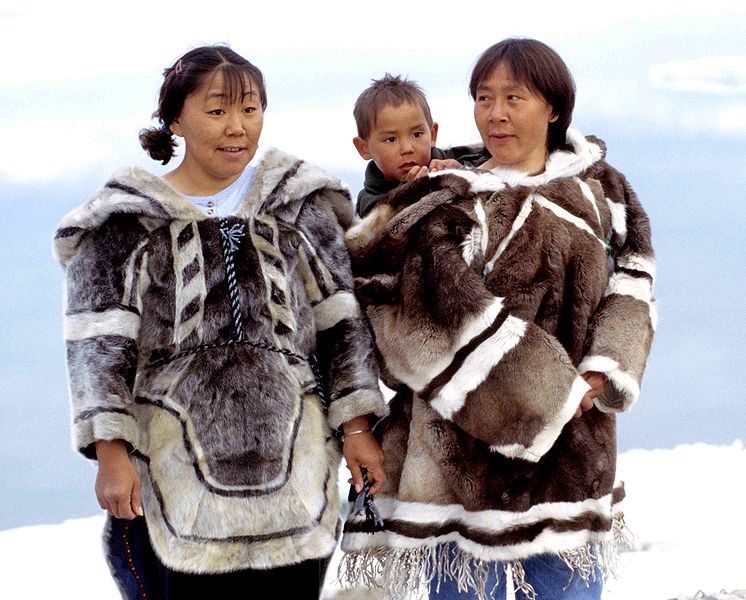
Inuit family in their traditional clothing
Image: Ansgar Walk, CC BY-SA 3.0, via Wikimedia Commons

The Northeast
These Indians lived between the Great Lakes and the Atlantic Coast and as far west as the Mississippi.
They were the first to make contact with European settlers. At first, the two groups were very friendly. Indians taught white people how to plant corn. In 1621, the Indians and the first pilgrims even had their first Thanksgiving ceremony together. But later on, fighting broke out between settlers and Indians when the white people started to move west and take away their land.
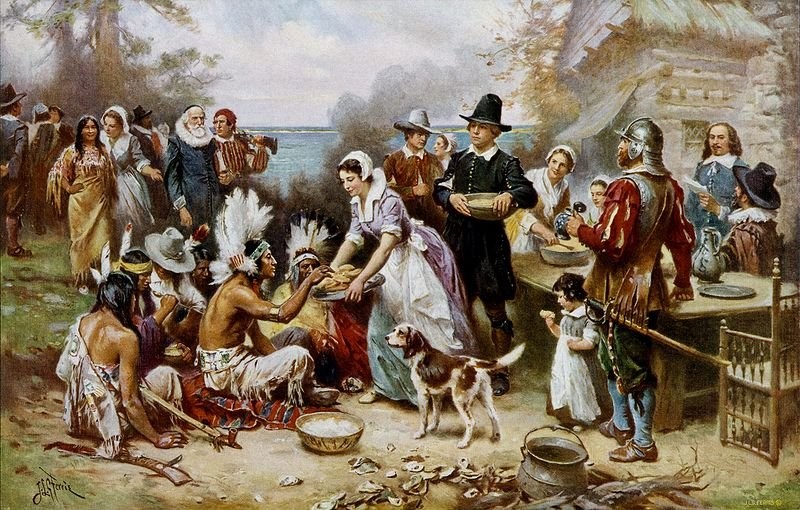
Native Americans and settlers take part in Thanksgiving feast
Image: Jean Leon Gerome Ferris, Public domain, via Wikimedia Commons

The Southeast
This region extends from the Ohio River to the Gulf of Mexico and from the Atlantic to the Mississippi. Indians lived in an area with mild winters and warm summers. Because there was enough rainfall, many tribes grew corn.
Women had much power in these tribes. Some of them even were allowed to take part in war councils.
Religion played an important role in the lives of the south-eastern Indians. They honoured their ancestors and when a person died many objects were put into their grave. Many Indian groups worshipped the sun.
The Plains
The Plains stretch from the Mississippi to the Rocky Mountains and from Canada to Mexico. Few Indians lived there before the arrival of the Europeans.
When the first Spaniards brought the horse to North America, the life of the Plains Indians changed. On horseback, they could follow buffalo herds more quickly, and buffalo meat became their main food. It was roasted over a fire and the skin was used to make clothes and tepees. Bones were used to make horns and other tools.
When white settlers came and also started hunting buffalo, the great animals of the Plains almost disappeared. Many Indians were driven away, and the white settlers turned the land into cattle farms and ranches .
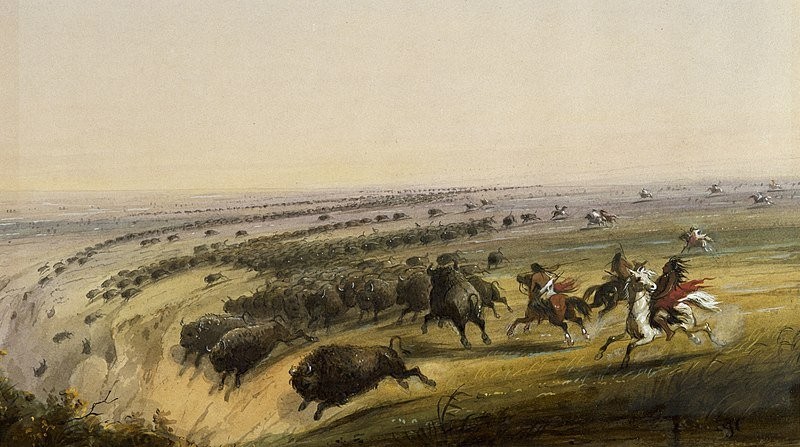
Plains Indians chasing buffalo over a cliff
Image: Alfred Jacob Miller, Public domain, via Wikimedia Commons

The Mountain Region
This region covers the highest parts of North America. Settlers came to the Rocky Mountain region when gold and other minerals were discovered in the second half of the 19th century. Miners poured in and drove the Indians off their land.
The first white people who made contact with the mountain tribes were the explorers Lewis and Clark. Fur traders followed . Today many Indians live on reservations.
The Southwest
This dry part of North America stretches from southern California to central Mexico.
Many famous tribes lived here. The Pueblos were among the most highly developed. They lived in villages and were mostly farmers. They planted corn and beans and raised turkeys. The Pueblo Indians built large houses called cliff dwellings. They had many storeys and were made of stone. People usually entered the houses through the roof. They climbed up a ladder that could be removed when an enemy attacked. The Pueblo were a peaceful tribe who only fought when they were attacked.
The Apache and Navajo Indians were fierce fighters. They often raided the Pueblo and searched for their food and other goods.
The first Europeans to come here were the Spanish. They tried to convert Indians to Christianity but mostly failed.
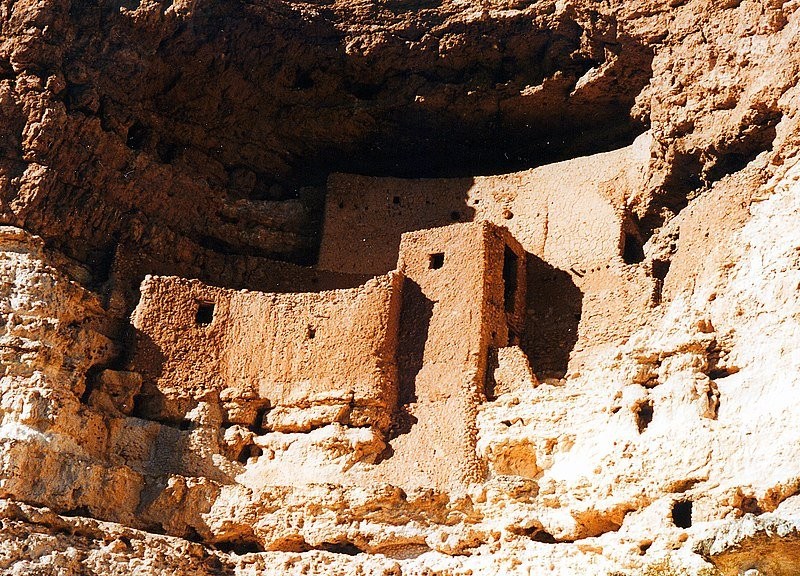
Cliff dwelling in Arizona
Image: Phillip Capper (PhillipC), CC BY 2.0, via Wikimedia Commons
,_Arizona.jpg)
Words
- ancestor = a member of your family who lived a long time ago
- arrival = the coming
- attack = to use weapons to hurt someone or kill them
- cattle farm = farm on which you raise cows
- century = a hundred years
- ceremony = an important event
- convert = change to
- cliff dwelling = houses that are built into hills or mountains
- corn = tall plant with large yellow seeds ; it is cooked to be eaten or used to feed animals
- deer = a large wild animal that can run very fast; it eats grass and has horns
- disappear = gone; not seen anymore
- discover = to find for the first time
- drive away = here : they had to leave
- drive off = to make someone leave
- explorer = someone who travels to an unknown area and wants to find out more about it
- extend = reach from one place to another
- fail = not succeed
- fierce = violent , brutal
- fur trader = a person who buys and sells the thick soft hair of animals
- grave = the place in the ground where a dead person is put
- Great Lakes = the five big lakes between the USA and Canada
- herd = group of animals from one kind that live together
- highly developed = to be very advanced ; here: to live a very modern life
- honour = respect
- inhabitant = person who lives in a city, country or region
- main = most important
- make contact with = to communicate with
- mammal = an animal that drinks milk from its mother's body when it is young
- miner = person who digs gold and other important minerals out of the earth
- pilgrims = group of English people who were the first Europeans to live in America
- pour in = to come in large numbers at the same time
- raid = to go to a place and steal things
- remove = take away
- reservation = an area of land that the government gave the Indians to live on
- roast = cook food over a fire
- seal = a large animal that eats fish and lives around the coast
- settler = someone who goes to live in a place where not many people have lived before
- Spaniard = a person who comes from Spain
- stretch = to reach from one place to another
- storey = floor
- Thanksgiving = a time when people thank God for the food he has given them
- toboggan = an object made out of wood that you use to ride down snowy hills
- tool = something that you hold in your hand and use to do a certain job
- tribe = a group of people who have the same way of life and the same language ; they are ruled by a chief
- war council = a meeting that takes place when a tribe is at war
- whale = the largest sea animal
- worship = pray to