
Arrival of the Europeans
The arrival of the Europeans in the New World was the beginning of the end of Indian life. Many settlers thought they were superior to the Indians and tried to force them to take on their way of life.
Land became the main problem between the Europeans and Native Americans. Settlers wanted land for farming and mining. As time went on, more and more Indians were forced off their land as new settlers arrived and travelled west.
At first, settlers and Indians were friendly towards each other, but when they started to protect their land, fighting broke out.
In 1830, a law was passed that allowed the government to move Indian tribes to the land west of the Mississippi.
When gold was found in California in the 1850s, settlers rushed west as quickly as possible and destroyed the land that the Indians depended on for hunting and fishing.
At the beginning of the 20th century, the American government started putting Indian tribes on reservations in the western part of the United States. Later on, American Indians were allowed to vote, and the government tried to integrate them into society.
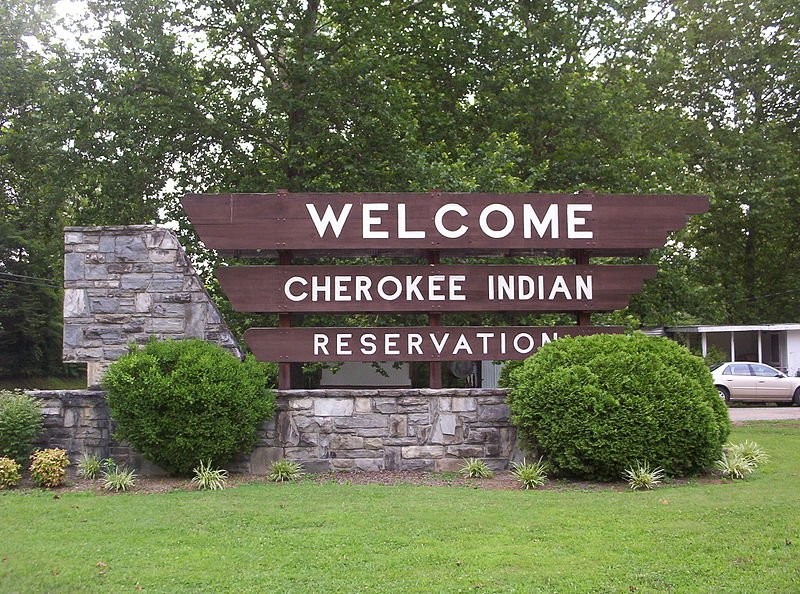
Cherokee Indian Reservation in North Carolina
Image : Sogospelman (talk) (Uploads), Public domain, via Wikimedia Commons

Words
- arrival = the coming
- century = a hundred years
- depend on = need
- destroy = to damage completely
- force = to make someone do something they don't want to do
- force off = here: they had to leave
- government = the people who rule a country
- integrate = to become part of a group of people
- law = set of rules that a country has
- mining= the job of digging coal, oil or other minerals out of the earth
- reservation = an area of land that the US kept separate for Native Americans to live on
- rush = hurry
- settler = person who goes to live in a place where not many people have lived before
- society = all the people in general
- superior = better than
- tribe = a group of people who have the same way of life, customs and language; they are ruled by a chief