
The Revolution of 1789
On July 14th, 1789 open rebellion against the king began. The Bastille, a famous prison in Paris where weapons were kept, was attacked. The middle and lower classes of France now had the power to rule the country.
Louis XVI remained king but he had no real power. He was taken from his palace at Versailles to Paris, where he was kept under house arrest. Louis thought that the only way to save France was to get help from other countries , so together with his wife and other noblemen, he tried to escape from France. But he was caught and brought back to Paris.
The National Assembly made many changes in France:
- They took land away from the church.
- Torture was banned.
- People of every class could join the army.
- The people elected the judges for the courts.
- A constitution was created.
Other European countries were afraid that the French Revolution might spread to their own countries, and in 1791 Prussia and Austria went to war against France.
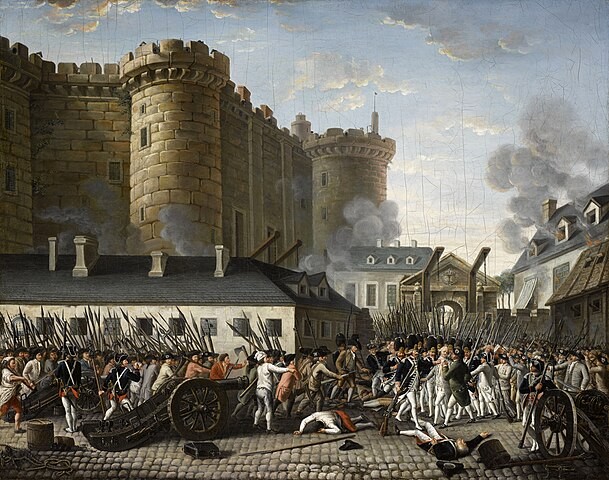
The storming of the Bastille
Image:Unidentified painter, Public domain,
via Wikimedia Commons

Words
- ban = forbid; to put away with something ; it doesn’t exist any more
- constitution = a system of laws that a country has
- court = place where a judge and jury decide if a person is guilty or not
- elect = vote for; choose
- escape = get away from
- house arrest = if you are not allowed to leave home
- join = to become a member of; to get together with others
- judge = a person who is in control of a court and decides how criminals should be punished
- nobleman = a man who is a member of the highest social class
- prison = a building where you keep people if they have done something wrong
- rebellion = if people fight against their king or queen
- remain = stay
- rule = govern
- spread = here: to become larger and move to other places
- torture = to hurt someone and make them tell you things that you want to know
- weapon = something that you use to fight with or attack someone