
Transportation
The mass production of goods during the 18th and 19th centuries called for new methods of transportation. New roads and a system of canals carried products made in factories to markets all over Britain. Coal, which was needed in factories in great quantities, was also transported on canals.
George Stephenson built a type of steam engine that could move on rails. In 1830 the Liverpool to Manchester railroad was opened and in the following twenty years railroads linked all major towns in Britain.
By the 1850s steam powered ships replaced sailing ships and became the primary way of transporting goods and people across the oceans. This increased world trade because ships were no longer dependent on good and strong winds in order to reach their destinations.
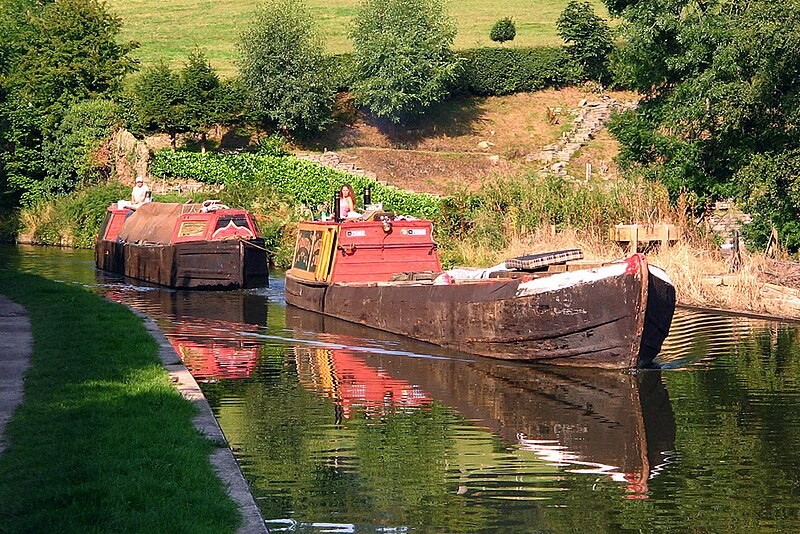
Early canal boats in Britain
Image: G-Man, Public domain,
via Wikimedia Commons

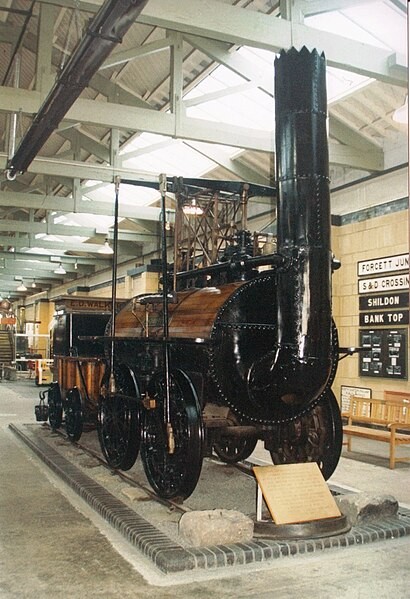
Steam locomotive from 1825
Image: Kim Traynor, CC BY-SA 4.0,
via Wikimedia Commons

Words
- call for = need
- canal = a long passage that is dug in the ground and filled with water for boats to travel along
- century = a hundred years
- dependent on = need
- destination = the place that someone or something is going to
- factory = a building in which you produce goods with machine
- goods = products
- increase = to go up
- link = connect
- major = important
- mass production = to produce goods in large numbers
- primary = main, most important
- quantity = the amount of something
- rail = the metal tracks on the ground on which trains move
- replace = to use instead of ...
- steam engine = a machine that produced power by burning coal and making hot water
- steam powered = run by a steam engine
- trade = the buying and selling of products