Sights and Places to See
| Site: | English Across the Curriculum |
| Course: | London (A2 - B1) |
| Book: | Sights and Places to See |
| Printed by: | Guest user |
| Date: | Sunday, 4 October 2026, 1:46 AM |
1. Buckingham Palace
Buckingham Palace is the most famous of London's many royal palaces. Constructed in the 18th century , it is located at the end of the Mall, one of London's broadest roads. The King and his family live in a part of the palace. Other parts can be visited by tourists. The Changing of the Guard is a ceremony that takes place every day.
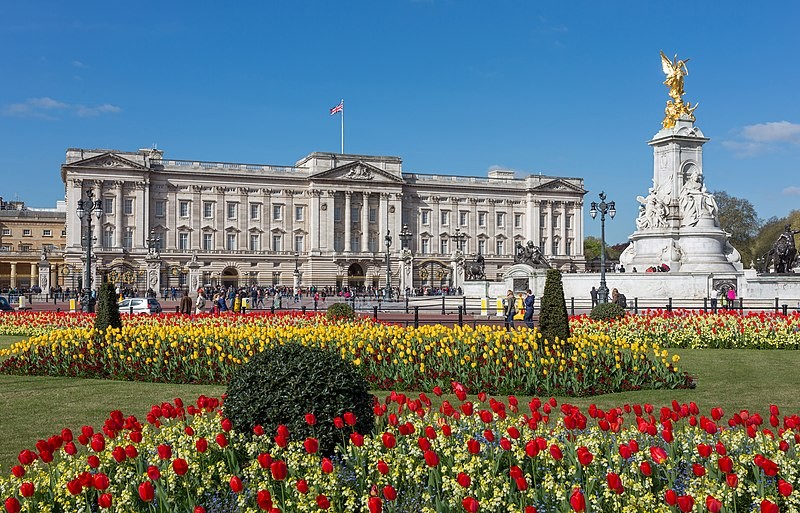
Buckingham Palace
Image: Diliff, CC BY-SA 3.0,
via Wikimedia Commons

Words
- broadest = widest
- century = a period of a hundred years
- ceremony = an important event that is performed in a special way
- constructed = built
- royal = something that belongs to the king or the queen
2. The Tower of London
The Tower of London is one of the oldest buildings in the city. The fortress consists of several buildings around a central tower . It is situated on the northern bank of the River Thames .
For many centuries, the Tower of London served as a prison . Among the most famous prisoners were the explorer Sir Walter Raleigh and Anne Boleyn, one of Henry VIII's wives, who was beheaded there.
Today visitors are able to see the Crown Jewels of England, which were originally protected by Beefeaters and the Tower's ravens .
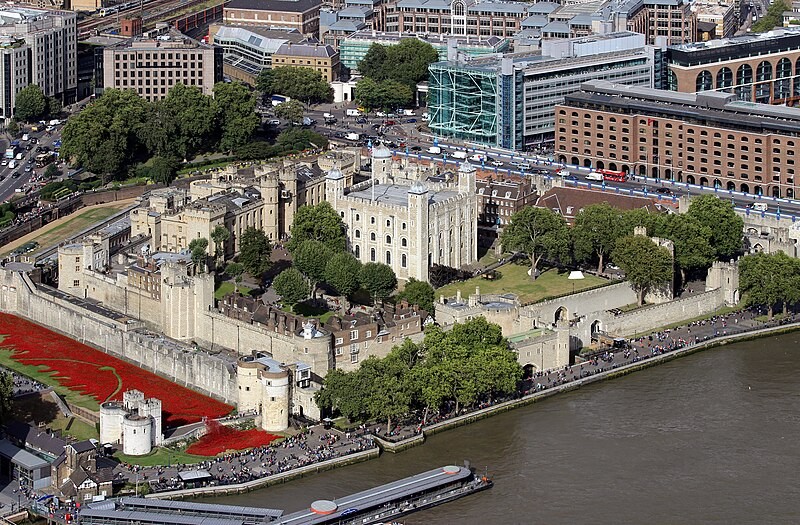
Tower of London
Image: © Hilarmont (Kempten), CC BY-SA 3.0 DE,
via Wikimedia Commons
.jpg)
Words
- bank = side of a river
- behead = to cut off someone's head
- consists of = to be made up of
- explorer = person who travels to unknown places in order to find out more about them
- fortress = a large, strong building that is used for defending an important place
- prison = place where you keep someone because they have done something wrong
- protect = guard, keep safe
- raven = a shiny, black bird
- serve = to have a function
3. Tower Bridge
The Tower Bridge , near the Tower of London, may be London's most impressive landmark . The bridge is over a hundred years old and can be raised to let ships pass through. The two towers and the walkway that connects them give visitors a great view of London.
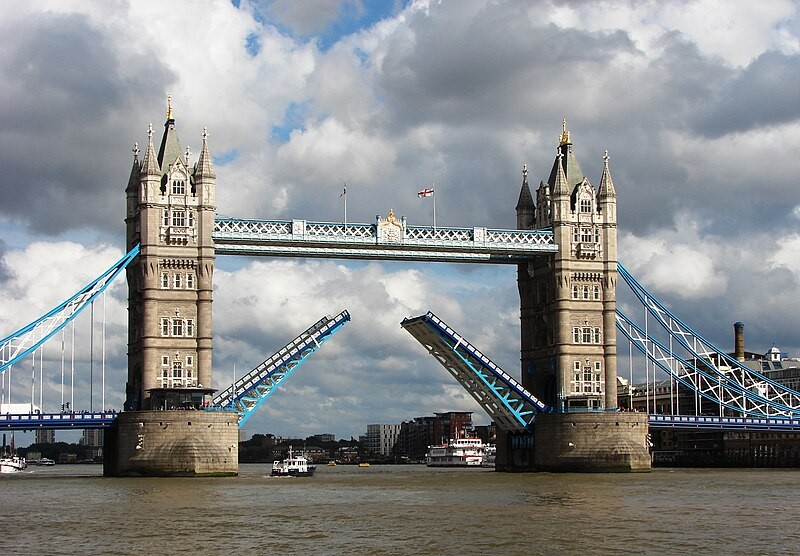
Tower Bridge
Image: Mvkulkarni23, CC BY-SA 3.0,
via Wikimedia Commons

Words
- impressive = exciting, great
- landmark = important building or sight that you can recognize at once
- raise = here: bring up
- walkway = a path that connects two objects
4. St. Paul's Cathedral
St. Paul's Cathedral was rebuilt in the 17th century by the great English architect Sir Christopher Wren after the original building had been destroyed by the Great Fire of London in 1666. It has the largest dome in the world after St. Peter's Basilica in Rome.
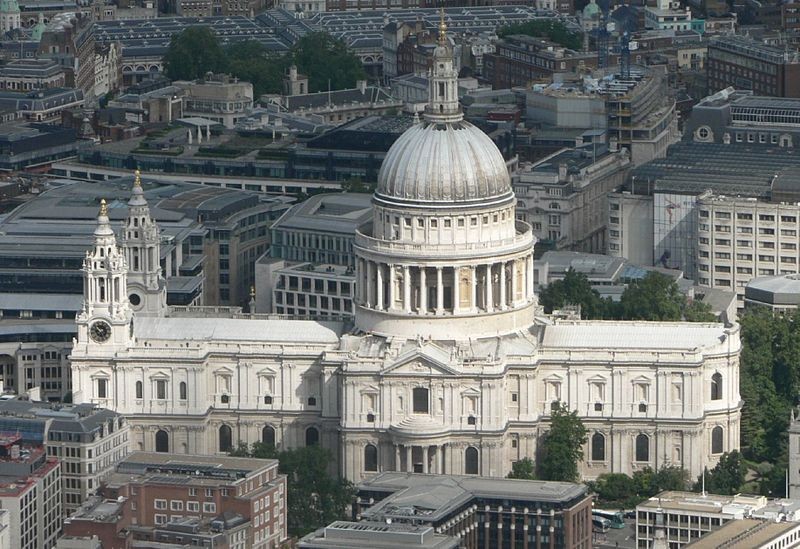
St. Paul’s Cathedral
Image: Mark Fosh, CC BY 2.0,
via Wikimedia Commons
.jpg)
Words
- century = period of a hundred years
- destroy = to damage completely
- dome = round roof of a building
- rebuilt = built again
5. Westminster Abbey
Westminster Abbey is located near the Houses of Parliament. Since its construction by William the Conqueror in 1066 almost all the country's kings and queens have been crowned there. Monarchs and famous people are buried in the abbey . Among them are Charles Darwin and Sir Isaac Newton.
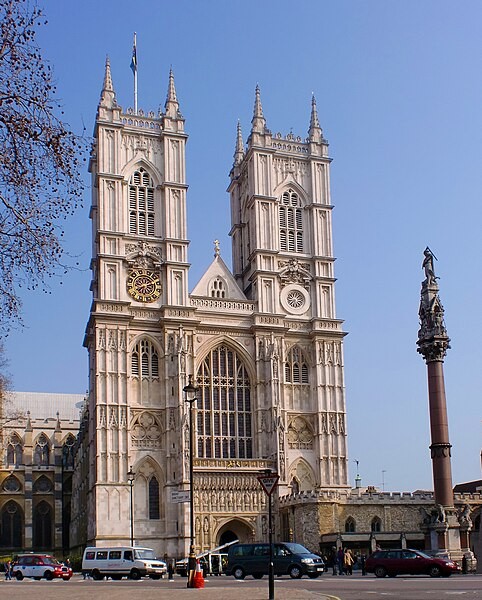
Westminster Abbey
Image: Σπάρτακος (changes by Rabanus Flavus), CC BY-SA 4.0,
via Wikimedia Commons

Words
- bury = to put a dead person in a grave
- Conqueror = a person who invades a country by fighting
- crown = to become king or queen in an official event
- monarch = king or queen
6. Trafalgar Square
The largest square in London has been a central meeting place since the Middle Ages. In the centre is Nelson’s Column, built in honour of Admiral Nelson, who defeated the French fleet at Trafalgar in 1805.
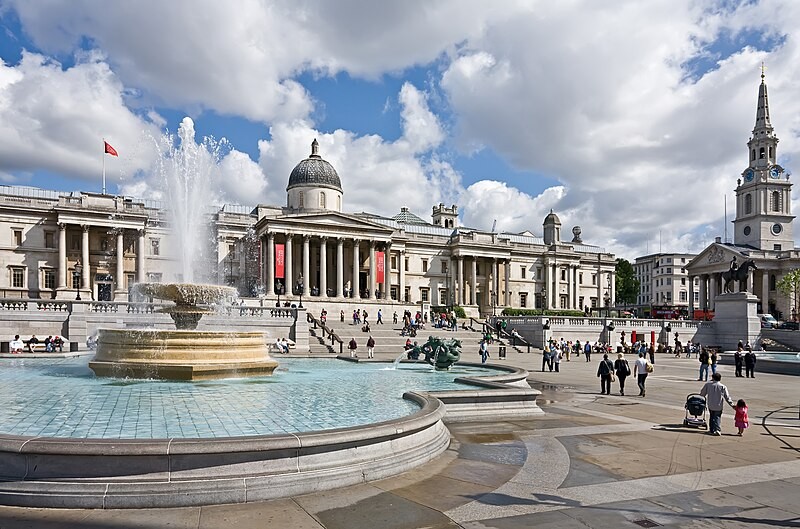
Trafalgar Square
Image: Diliff, CC BY-SA 3.0,
via Wikimedia Commons

Words
- defeat = to win against
- fleet = the ships that belong to the navy of a country
- in honour of = to show that you respect someone
7. Picadilly Circus
A busy plaza in the heart of London lies at the junction of five major streets. The place is famous for its colourful billboards , a fountain and a statue of Eros.

Picadilly Circus
Image: Jimmy Baikovicius, CC BY-SA 2.0,
via Wikimedia Commons,

8. Houses of Parliament
The Houses of Parliament are located in the City of Westminster, alongside the River Thames . Both the House of Commons and the House of Lords hold their meetings in the palace. Big Ben , the clock tower's famous bell , has been chiming since the middle of the 19th century.
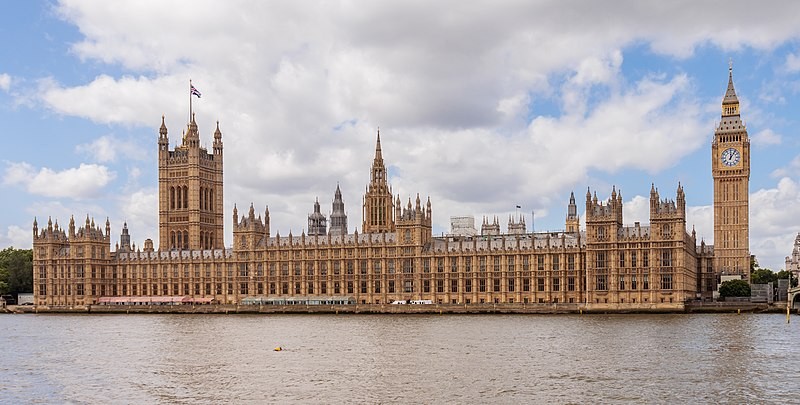
Houses of Parliament
Image: Terry Ott from Washington, DC Metro Area, United States of America, CC BY 2.0,
via Wikimedia Commons
.jpg)
Words
- alongside = next to
- chiming = ringing
9. London's Parks
The City of London is well known for its large and beautiful parks.
Hyde Park is the largest of London's royal parks. It is about 2 km long and over 1 km wide. Hyde Park is a popular area for free time activities, including jogging, running, and horse riding. Speaker's Corner, near the north-eastern entrance of Hyde Park, is a place where Londoners gather and listen to people who talk about all kinds of things. The Serpentine is a large artificial lake where people can go swimming or rowing .
London has many other parks, including St. James's Park, with a great view of Buckingham Palace, and Green Park.
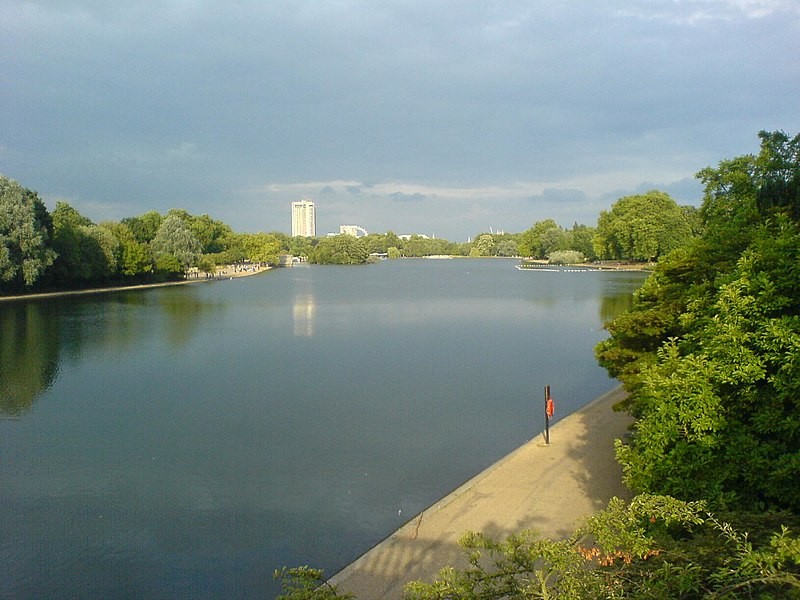
The Serpentine in Hyde Park
Image: The original uploader was Jamie101 at English Wikipedia., CC BY-SA 2.5,
via Wikimedia Commons

Words
- artificial = man-made, not natural
- entrance = place where you go in
- gather = get together
- rowing = to make a boat move across water with the help of paddles
- royal = referring to a king or queen
10. Greenwich
Greenwich is a famous district in the eastern part of London. Tourists either take a Thames boat ride there or go by the Dockland's Light Railway. Greenwich is famous for British naval history.
The National Maritime Museum shows exhibits from a time when Britain was the world's biggest sea power.
The Royal Observatory has a planetarium and a museum with a display of astronomical and navigational instruments. The prime meridian of the world goes through the observatory. It divides the world into an eastern and western hemisphere .
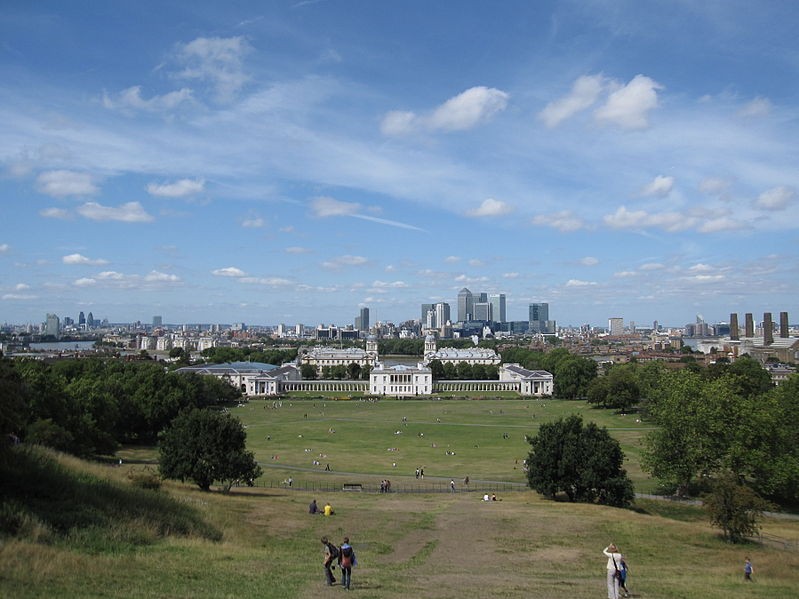
Greenwich and the National Maritime Museum
Image: Gryffindor, CC BY-SA 3.0,
via Wikimedia Commons

Words
- astronomical = about the sky and planets
- display = exhibition ; something that is shown in public
- district = part of a city
- divide = split into two parts
- exhibit = an object that is shown in a public place, so that people can go and see it
- hemisphere = half of the Earth
- naval = marine; everything that has to do with the navy
- planetarium = building with a curved roof; lights and special effects show how stars and planets move
- prime meridian = a line from the North to the South Pole that divides the Earth into an eastern and a western half; the Earth's time zones also start from here
11. London Eye
A giant Ferris wheel rises 135 m high on the south bank of the River Thames. It was built as a part of London's millennium celebrations . Each egg-shaped cabin can take up to 25 passengers. A complete turn of the wheel takes 30 minutes.
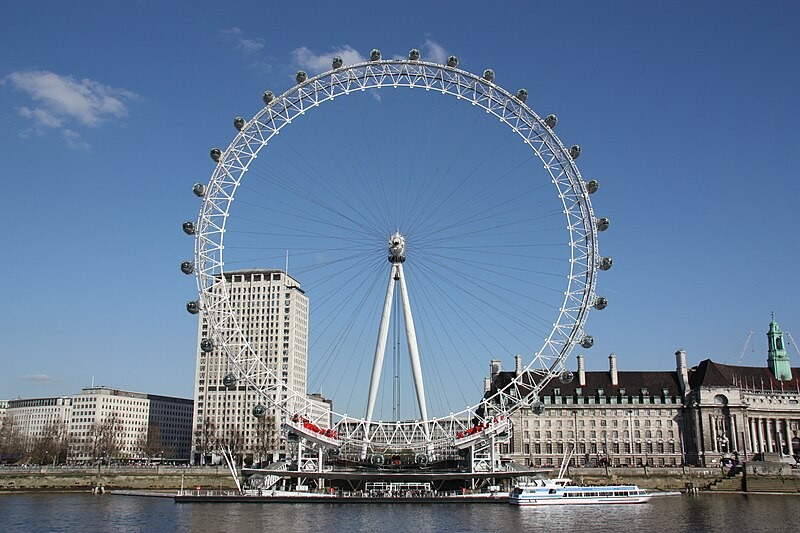
London Eye
Image: Khamtran, CC BY-SA 3.0,
via Wikimedia Commons

Words
- bank = side of a river
- cabin = a small room
- millennium = beginning of the next thousand years
12. Windsor Castle
One of the royal family's official residences is the largest inhabited castle in the world. It lies about 30 km west of London. In the course of history it has been changed several times.
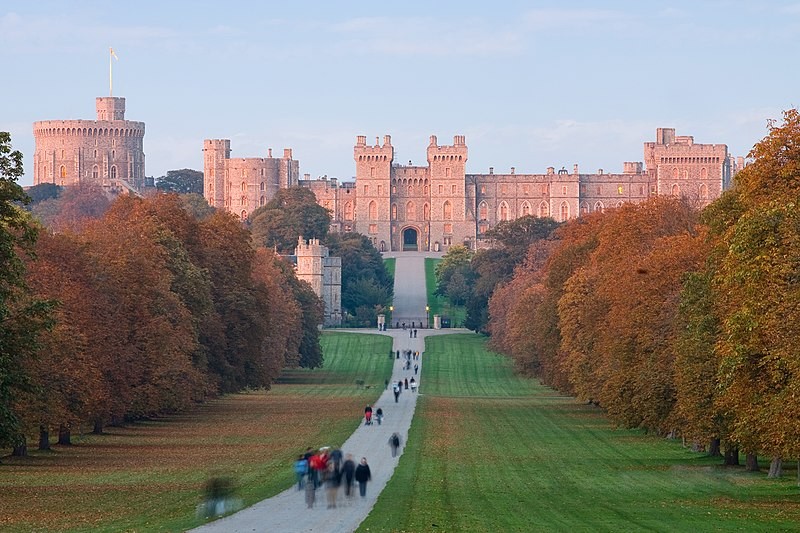
Windsor Castle
Image: Diliff, CC BY-SA 3.0,
via Wikimedia Commons

Words
- course of history = as time went on
- inhabited = lived in
- official residence = here: place where the royal family usually lives
13. Covent Garden
The former fruit and vegetable market is always a crowded place , especially during weekends and in the summer. Today it is known for its open-air cafés, restaurants, pubs and street performers .
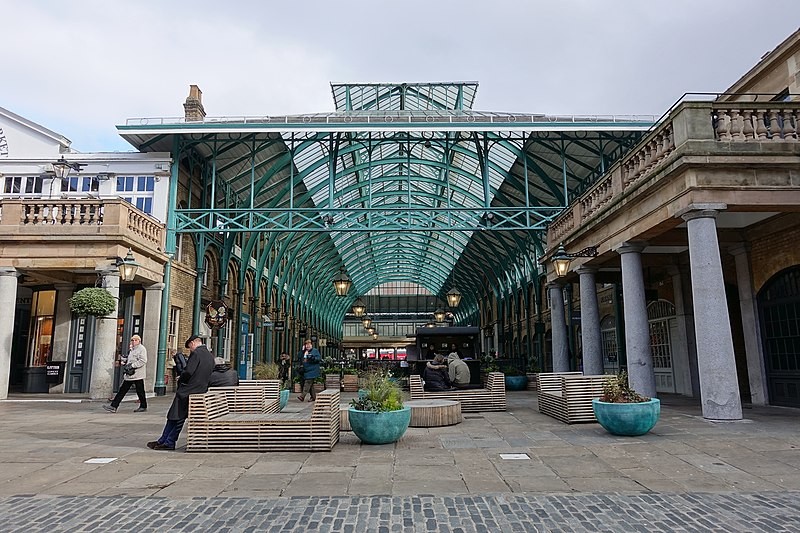
Covent Garden
Image: CrisNYCa, CC BY-SA 4.0,
via Wikimedia Commons

Words
- crowded place = many people in a small area
- especially = above all
- former = in past times
- open-air = outside
14. Madame Tussauds
The most famous museum of wax figures was opened in 1835. Thousands of famous people, artists, writers, politicians and other celebrities have been created in wax. During the tourist season, waiting lines can be very long. The museum now has other wax museums in cities all over the world.
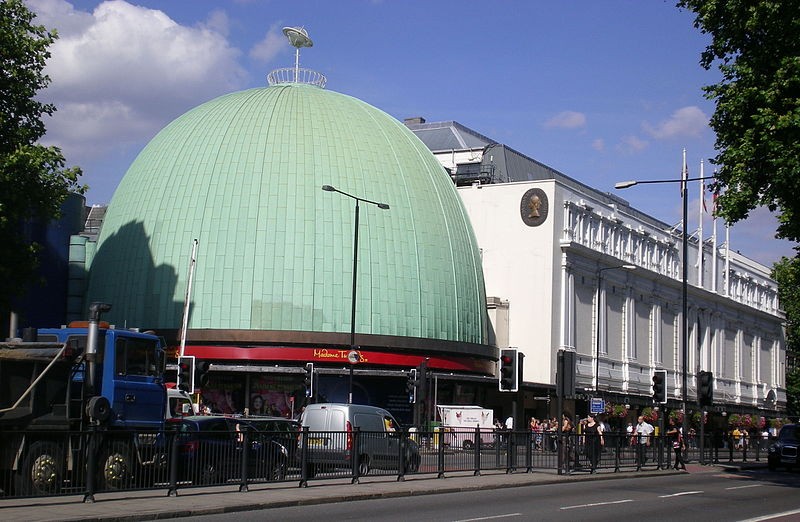
Madame Tussauds Wax Museum
Image: I, Citizen59, CC BY-SA 3.0,
via Wikimedia Commons,

Words
- celebrity = famous person who is often in the media
- politician = person who works in the government or for a political party
15. The Globe Theatre
The Globe was originally built in 1599 by William Shakespeare's company of actors. It was destroyed and rebuilt in the early 17th century. Shakespeare's Globe, a reconstruction of the old Globe, was finished in 1997.
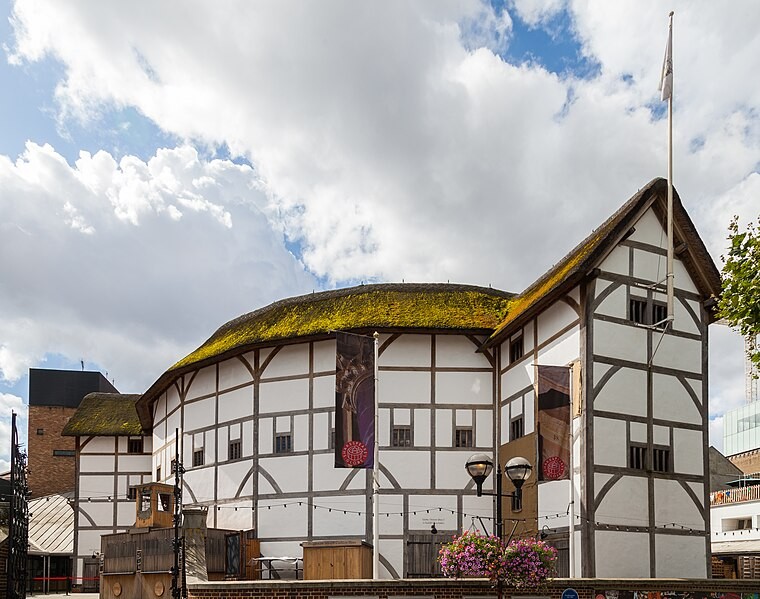
The new Globe Theatre
Image: Diego Delso, CC BY-SA 4.0,
via Wikimedia Commons

Words
- century = a period of a hundred years
- destroyed = damaged completely so that you can't use it any more
- originally = at first
- reconstruction = to build something like it again